Ayla Olya Dmyterko
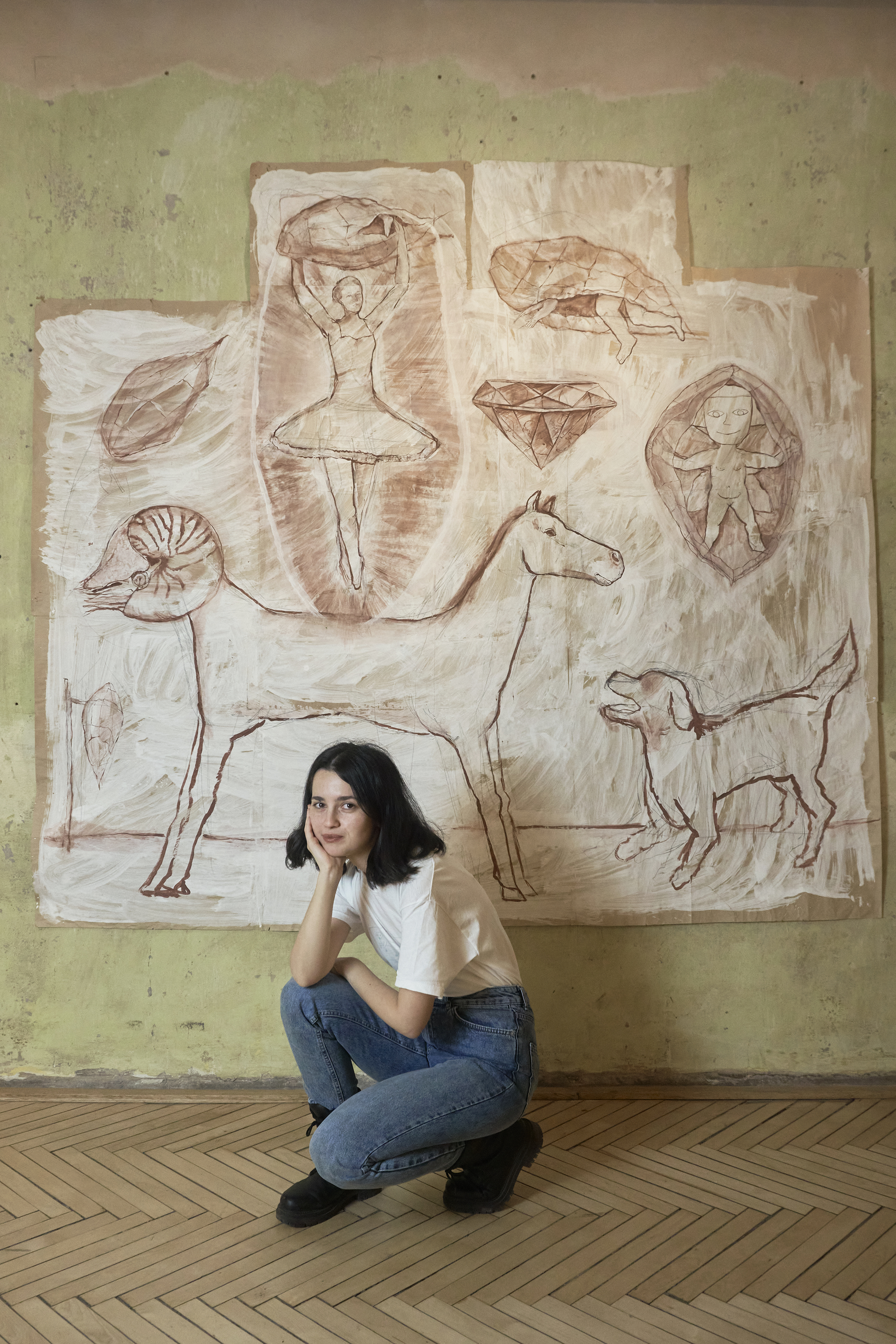
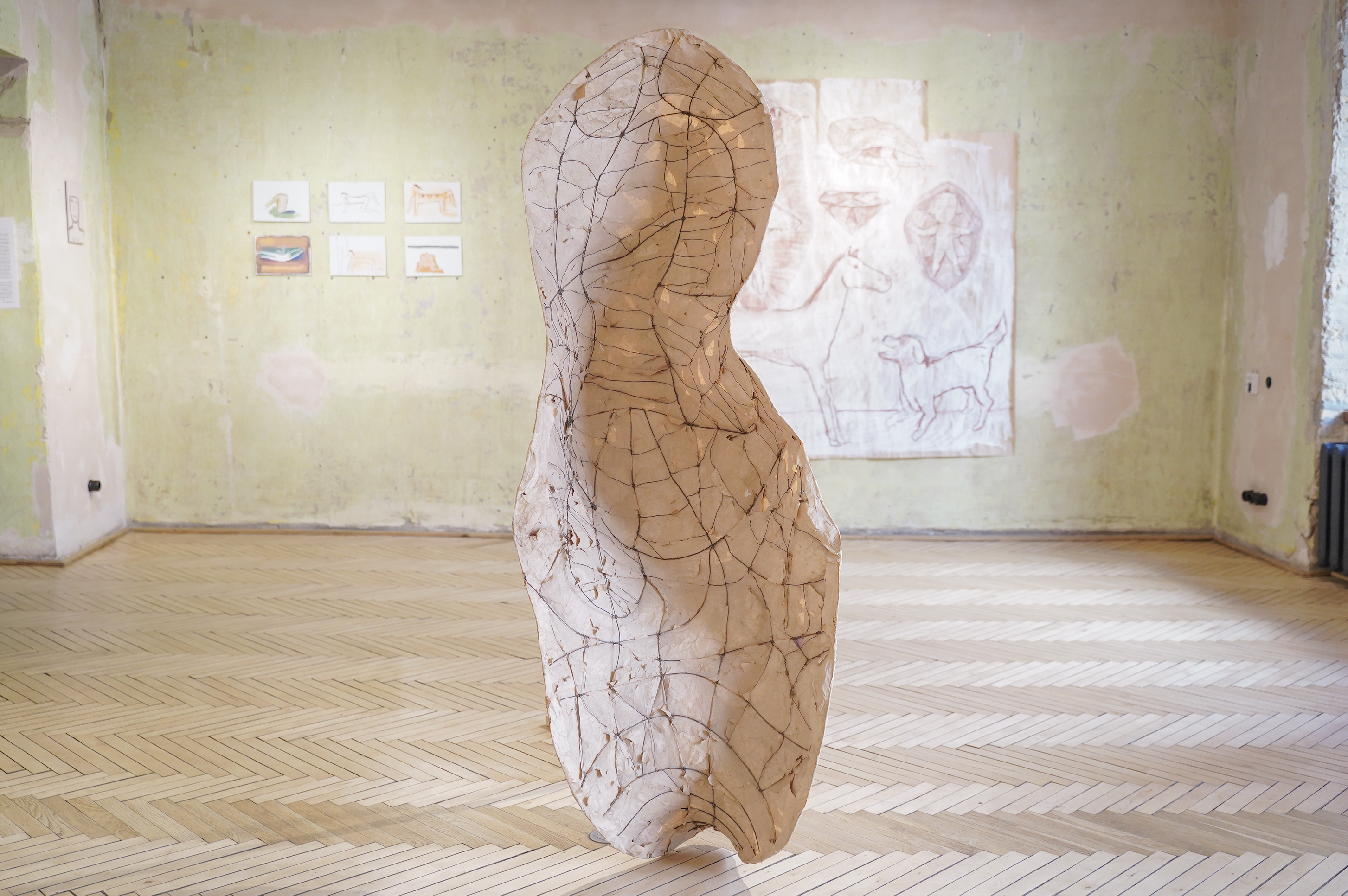
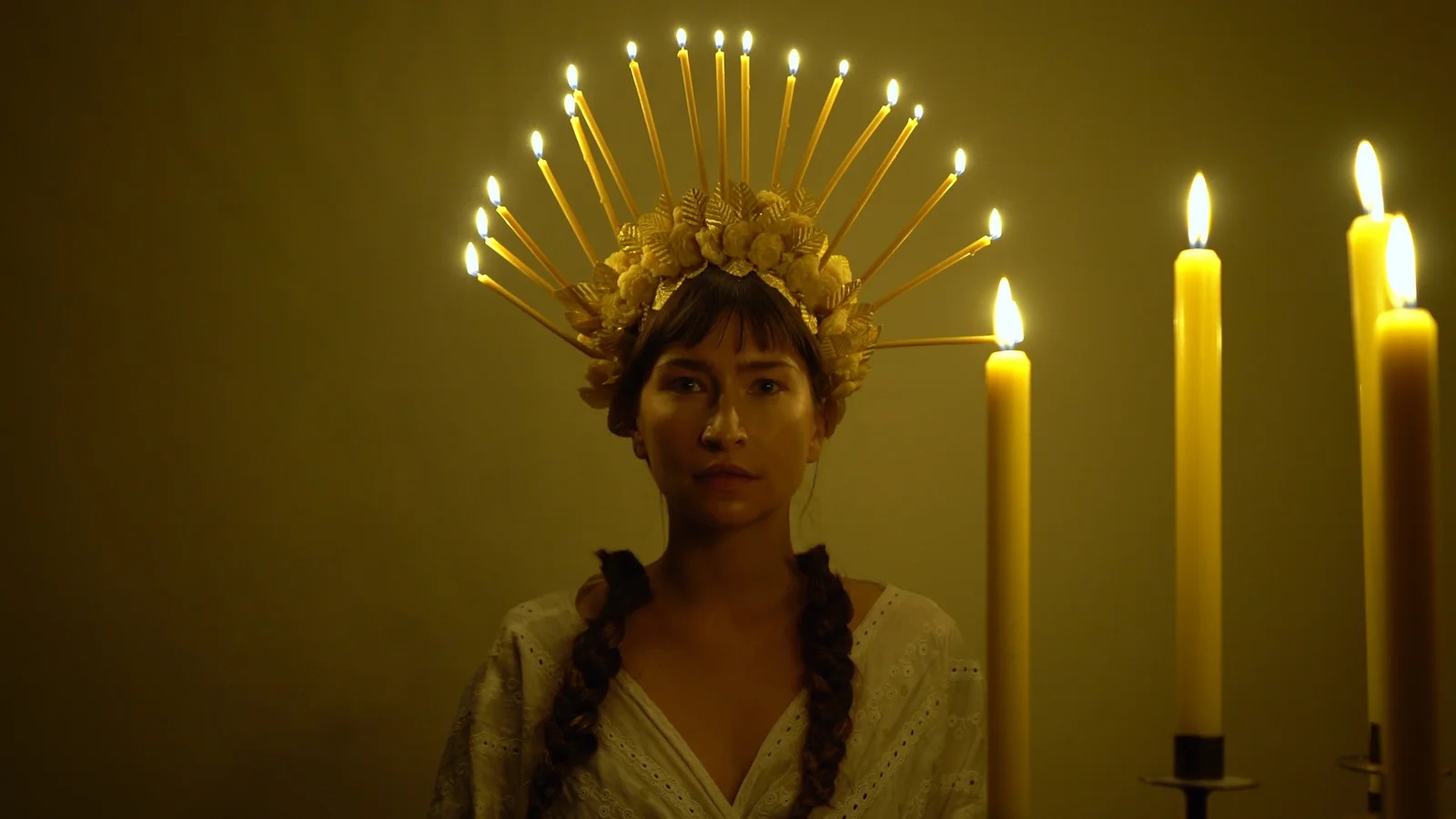
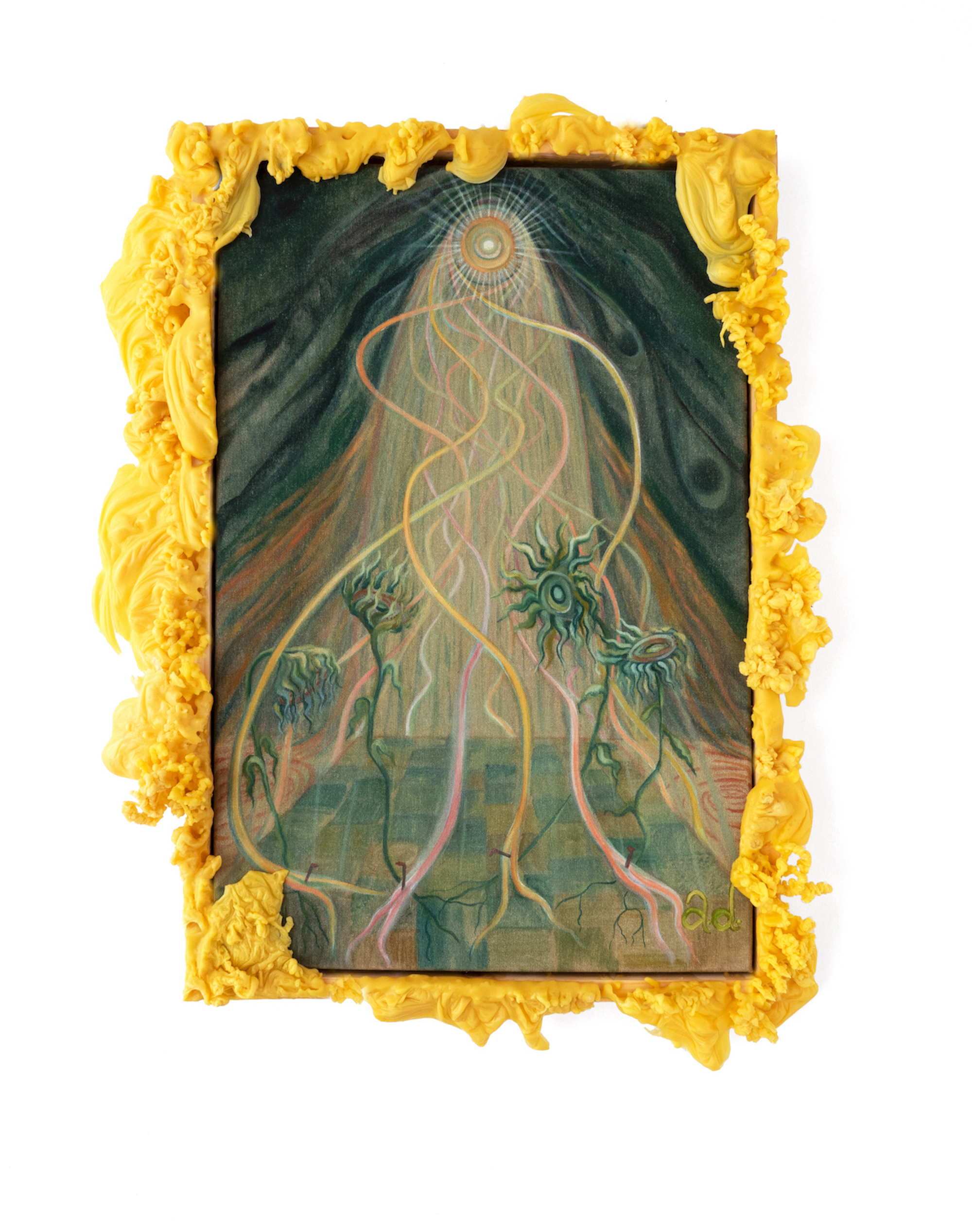
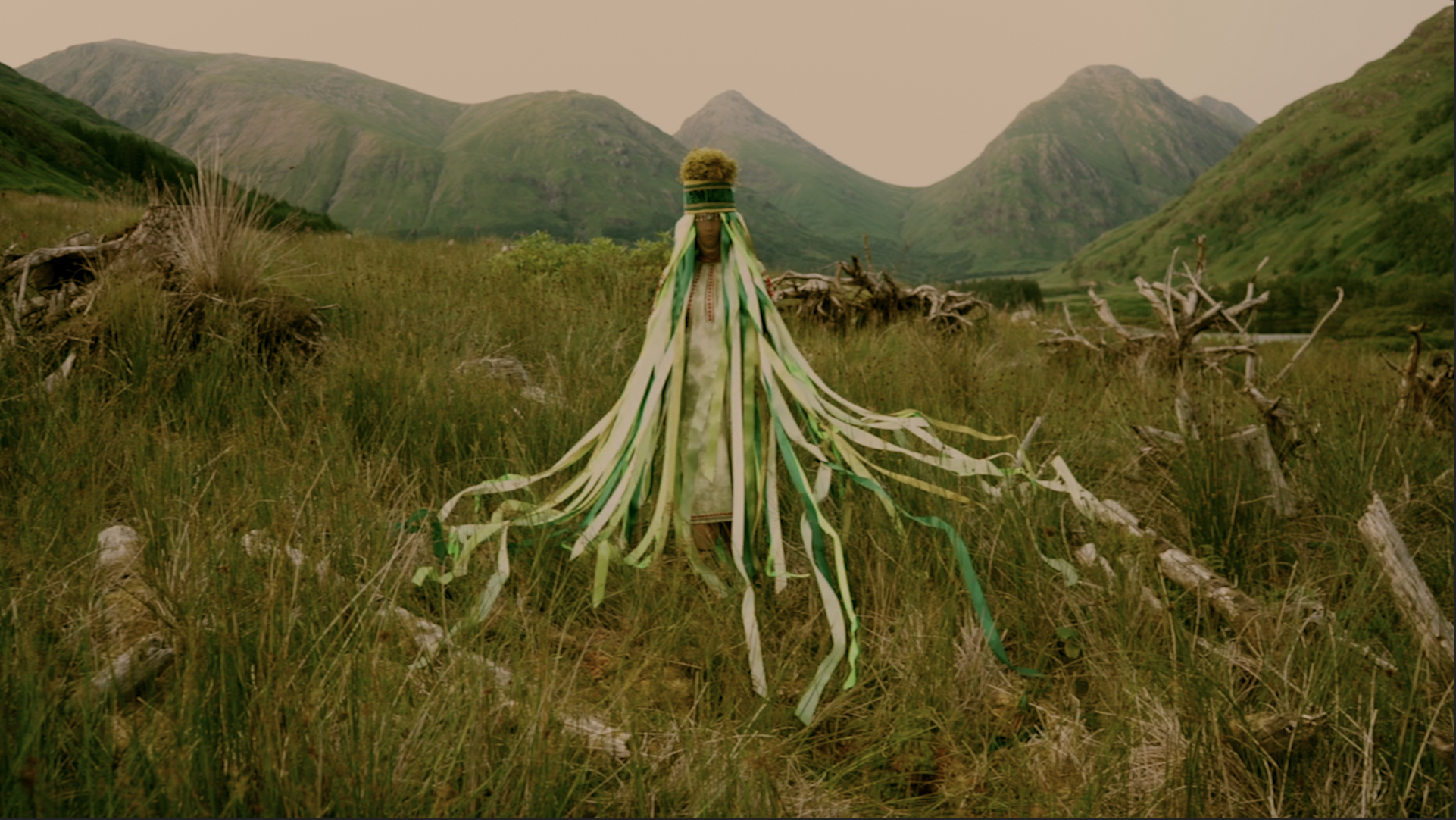
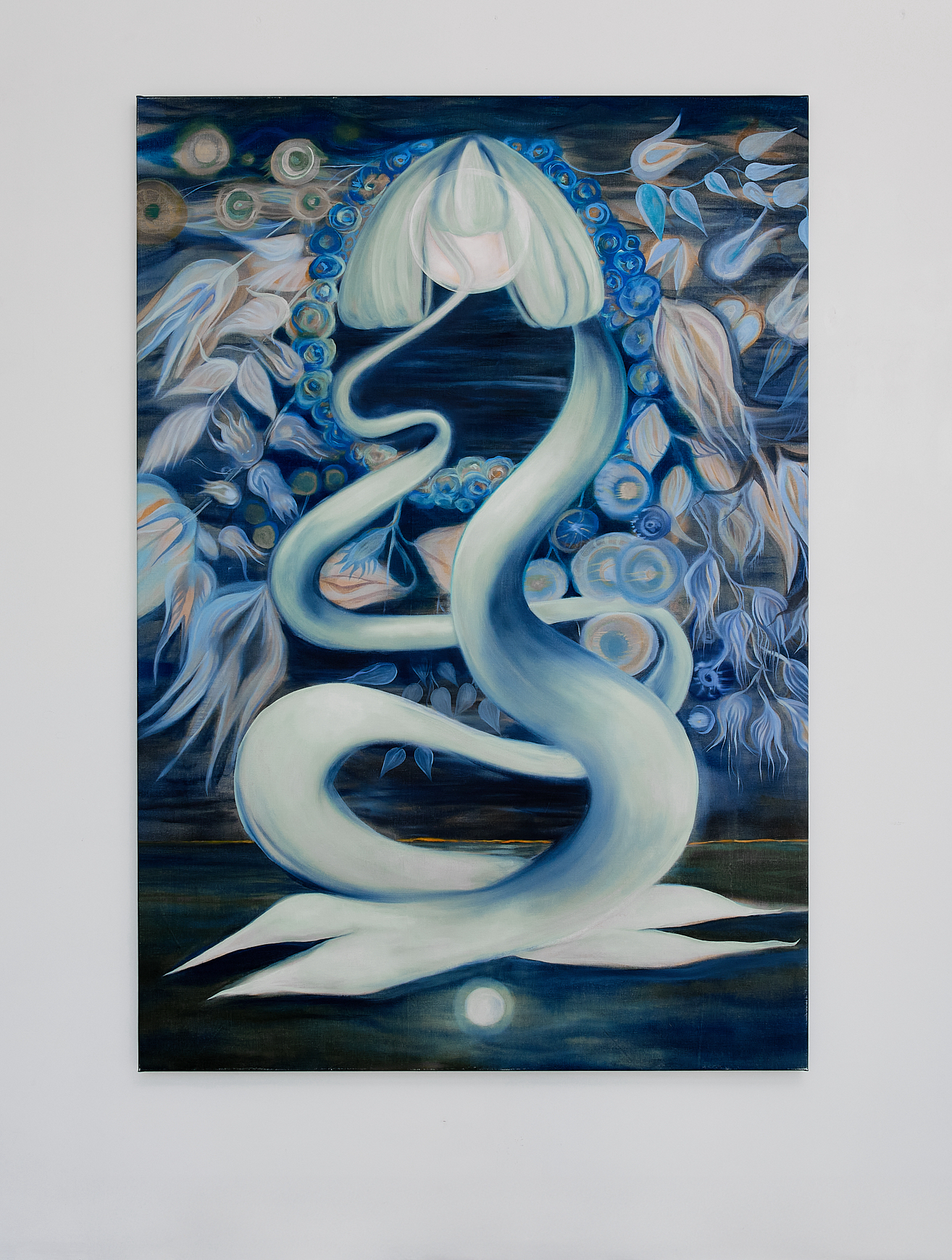
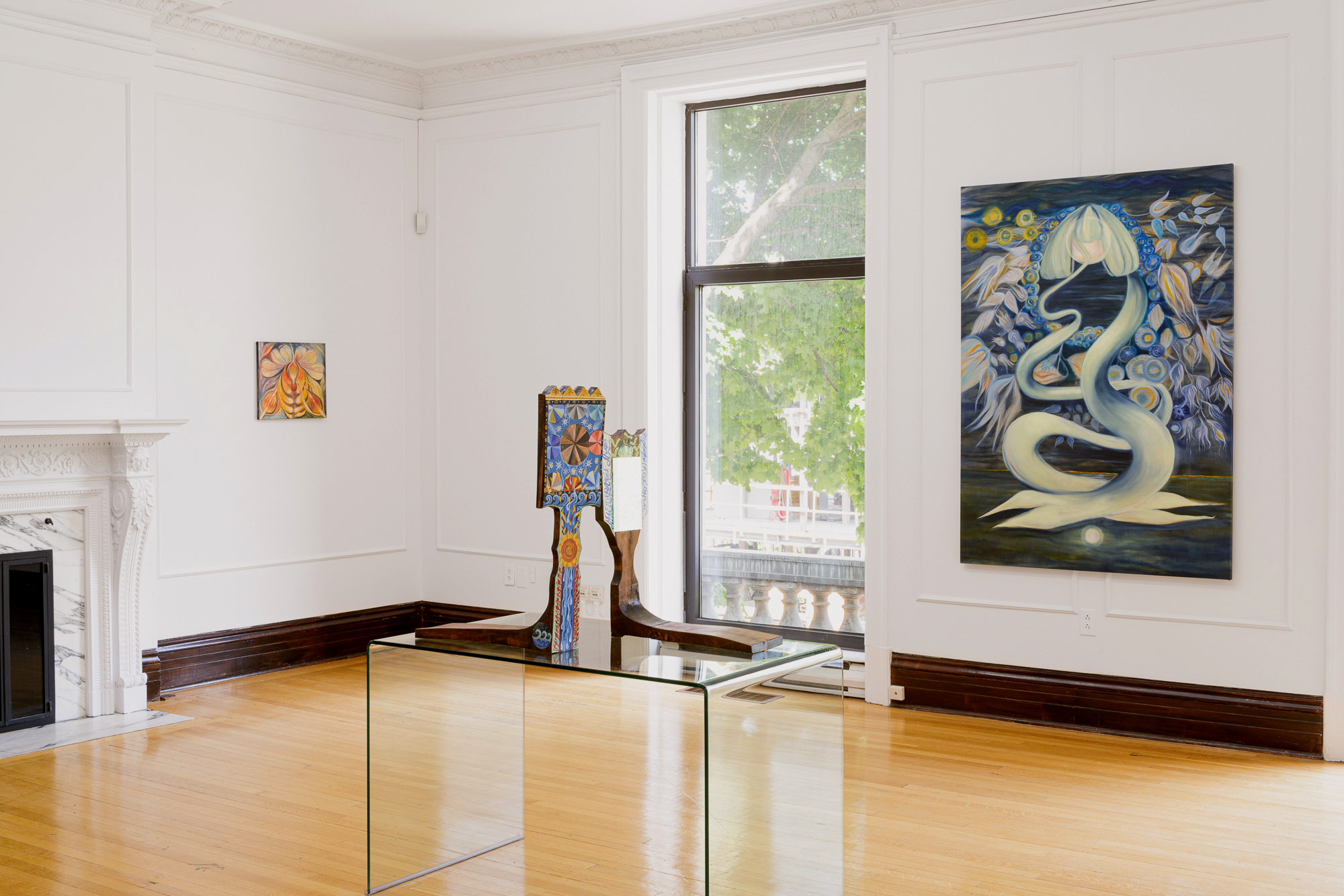
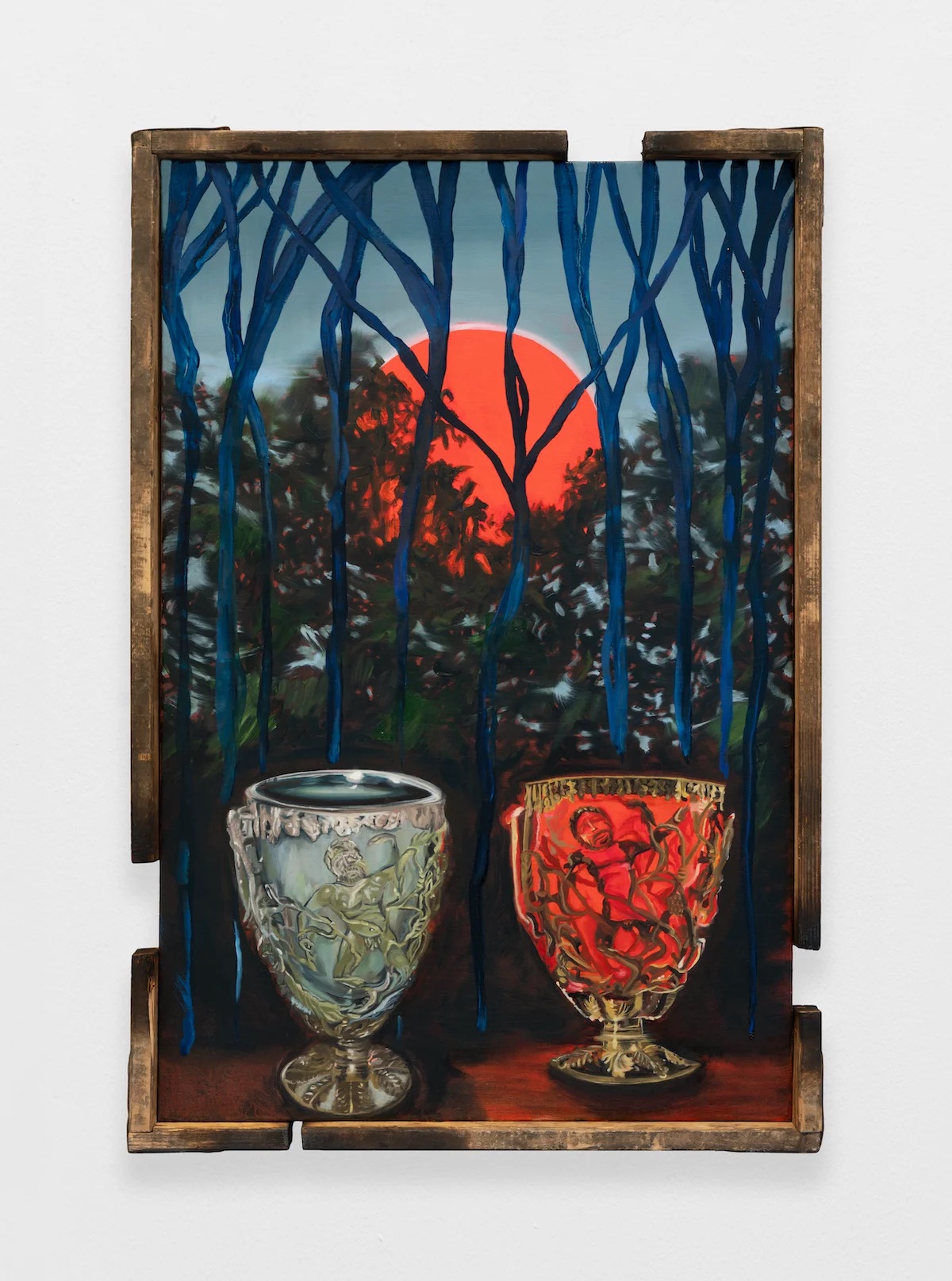
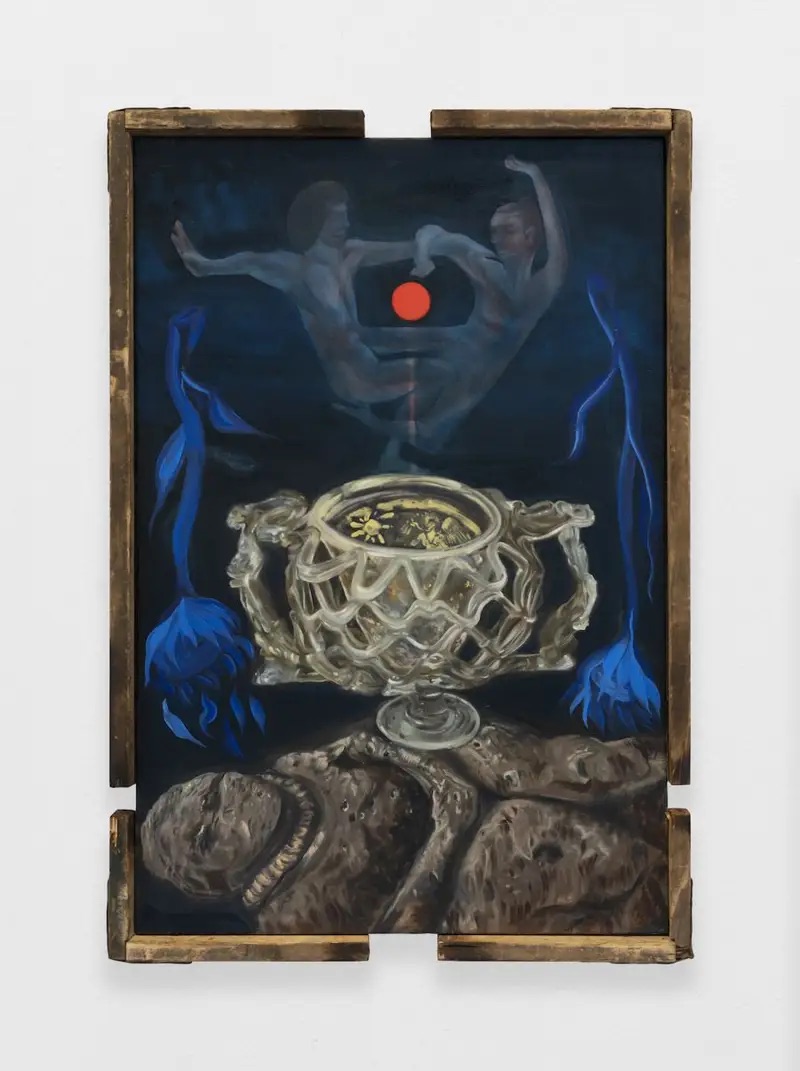
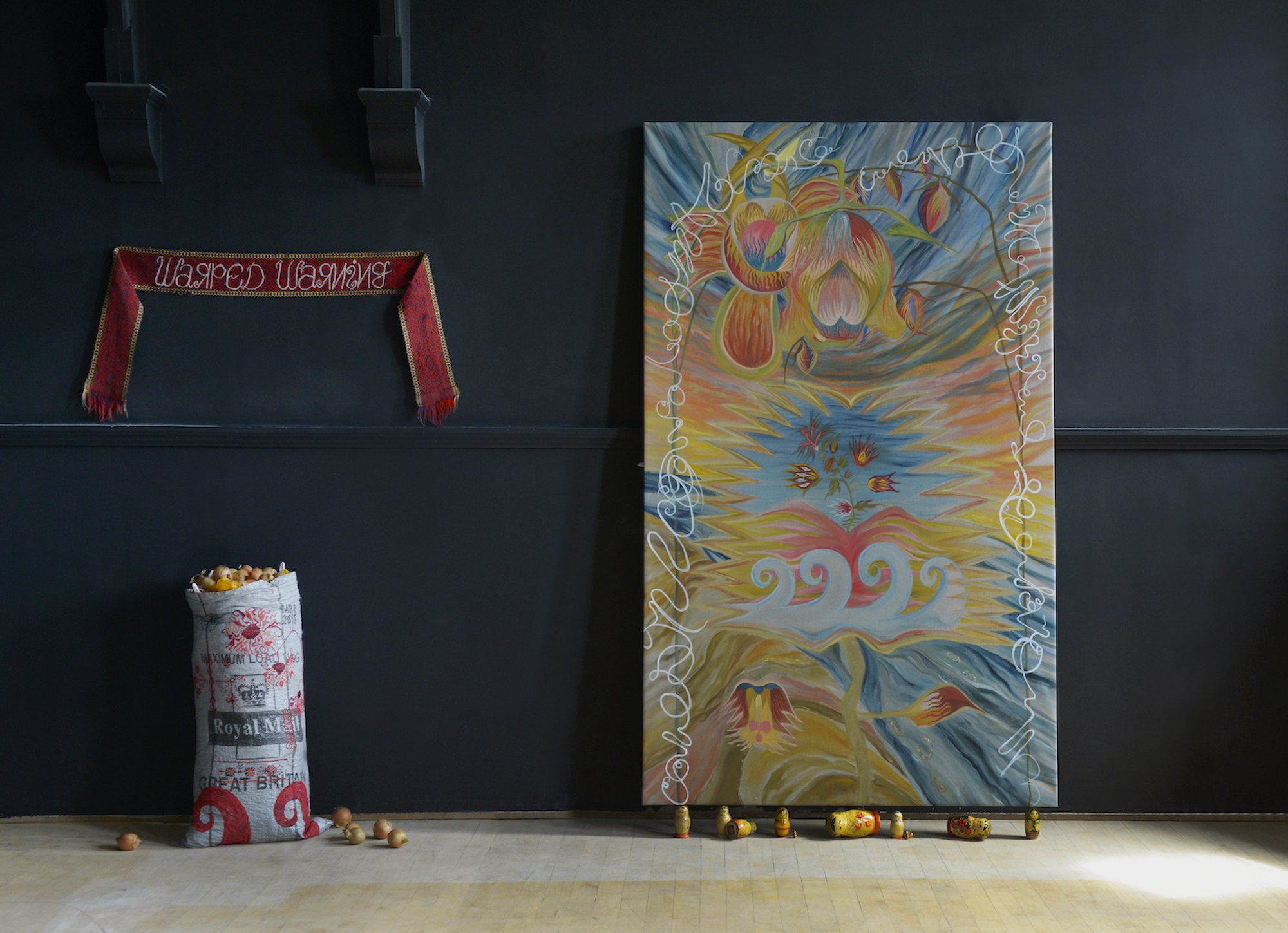
Glasgow-based artist and researcher Ayla Dmyterko deconstructs visual symbols and oral histories within the Canadian-Ukrainian diaspora, bringing together auto-ethnographic writing and studio-led investigation. Her practice disrupts the accelerating pace of the information age by building contemplative worlds of colour, fantasy, and form. Drawing on immutable symbols, folkloric surrealism, and pareidolia - the perceived recognition of significant patterns in spontaneous shapes. Positioning her work through her own diasporic experience and the broader mythos of cultural memory, Dmyterko reflects on her family’s migration from Ukraine to Canada via the Glasgow ports. Born in Canada, two generations removed from this journey, she works through a sensed disconnect between contemporary Ukrainian realities and her lived experience, creating a transnational, intergenerational repository of folkloric signification shaped by natural and supernatural worlds.
Basny Rugs
Basny Rugs is a project founded by Volodymyr Benedychuk, a musician from Kyiv who relocated to the Carpathian Mountains and drew inspiration from the region’s Hutsul traditions. The project brings a modern visual language to local Carpathian weaving practices, creating rugs that merge historical aesthetics with contemporary sensibilities. Rejecting modern consumerism, Basny Rugs emphasises the role of household objects as central elements of human life. The Carpathian Mountains span roughly 1,500 kilometres across Central and Eastern Europe, stretching from Slovakia through Ukraine to the borders of Serbia and Romania. Within this region, two main types of woven rugs, 'kylym’ and ‘leashnyk’ - feature geometric patterns distinguished primarily by thread thickness. The fluffy wool ‘leashnyk’ may be used on beds, floors, or hung on walls for insulation, and it also plays a ritual role, accompanying weddings, funerals, and other major life events.
.jpg)
.jpg)
.jpg)
.jpg)
.jpg)
.jpg)
Charlie Kleeman
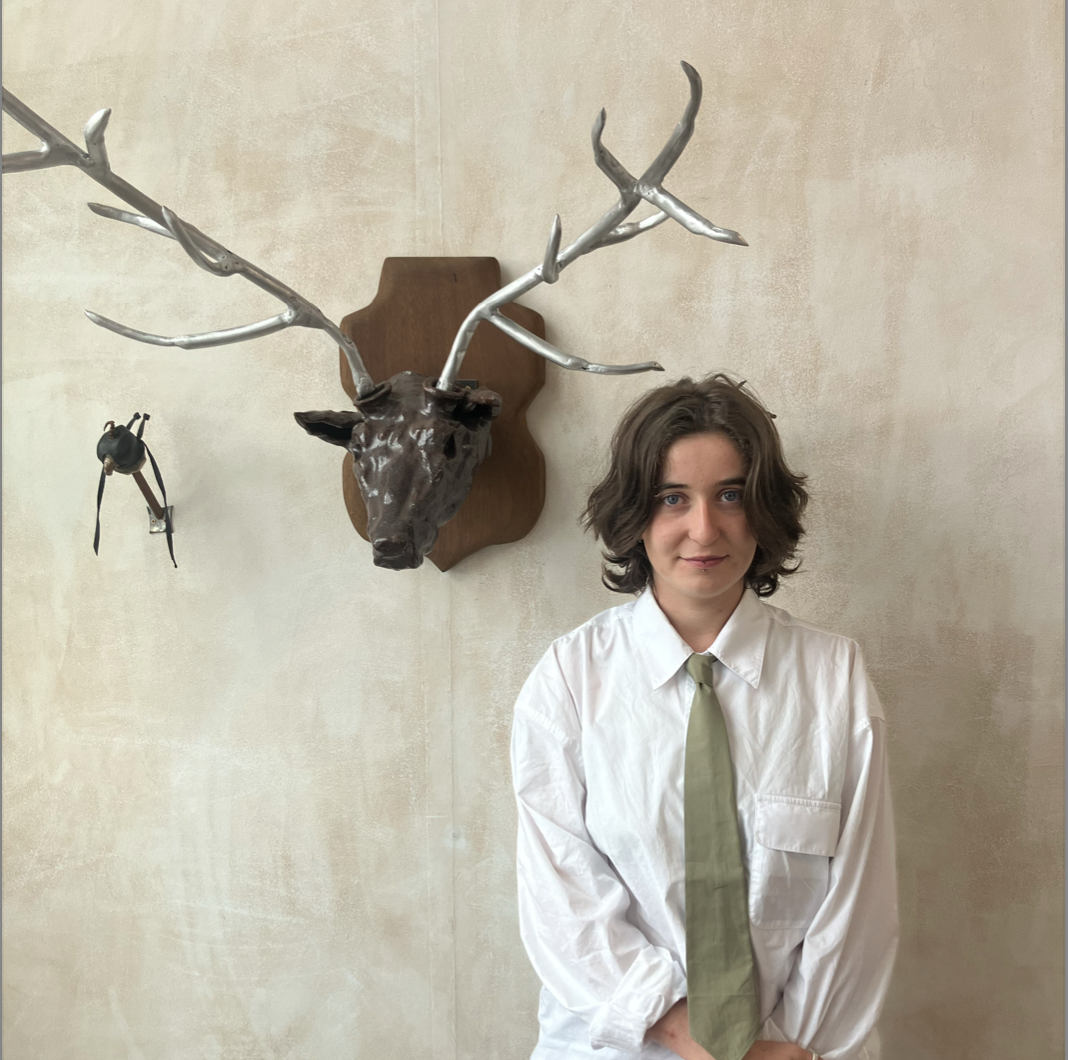
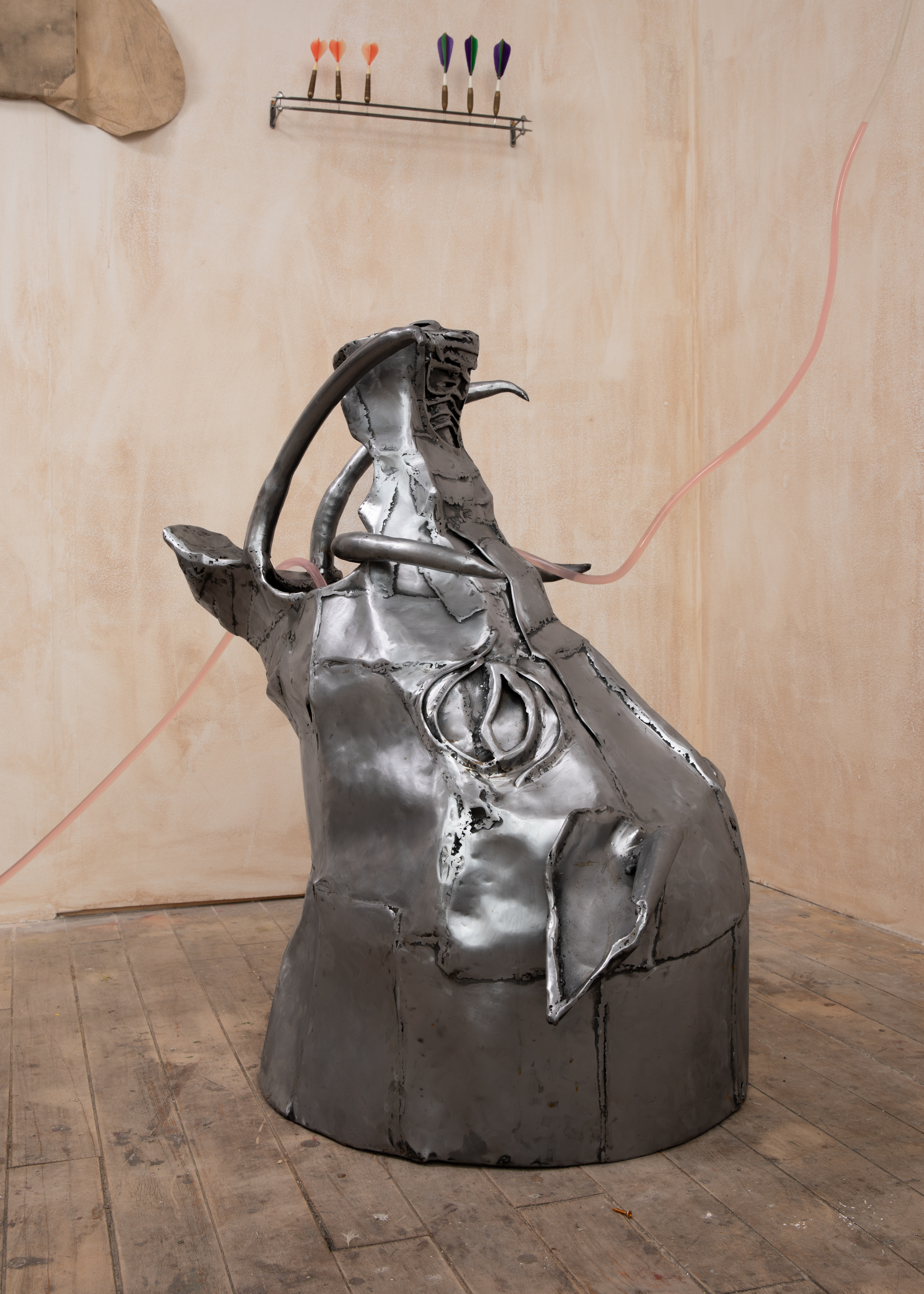
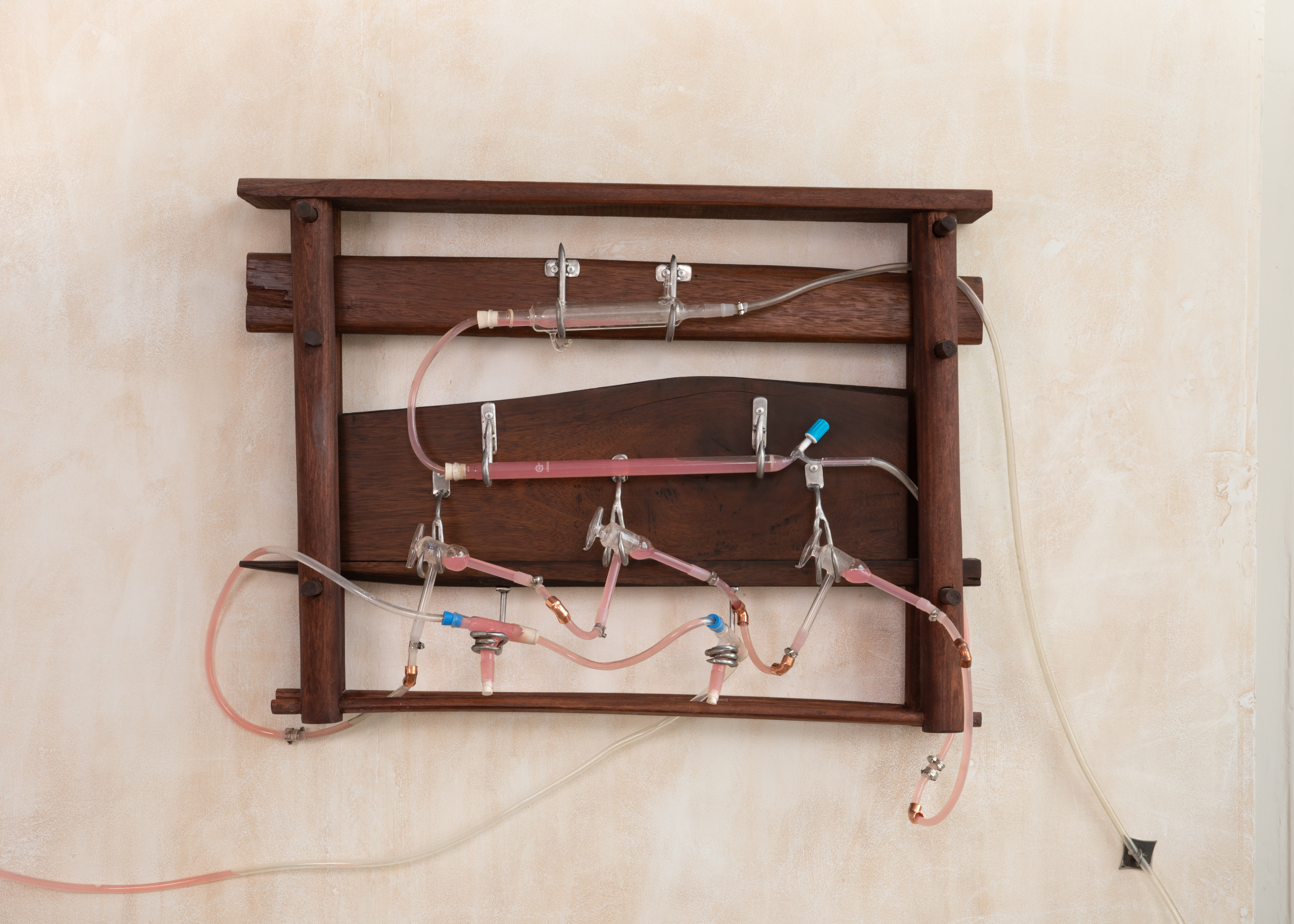
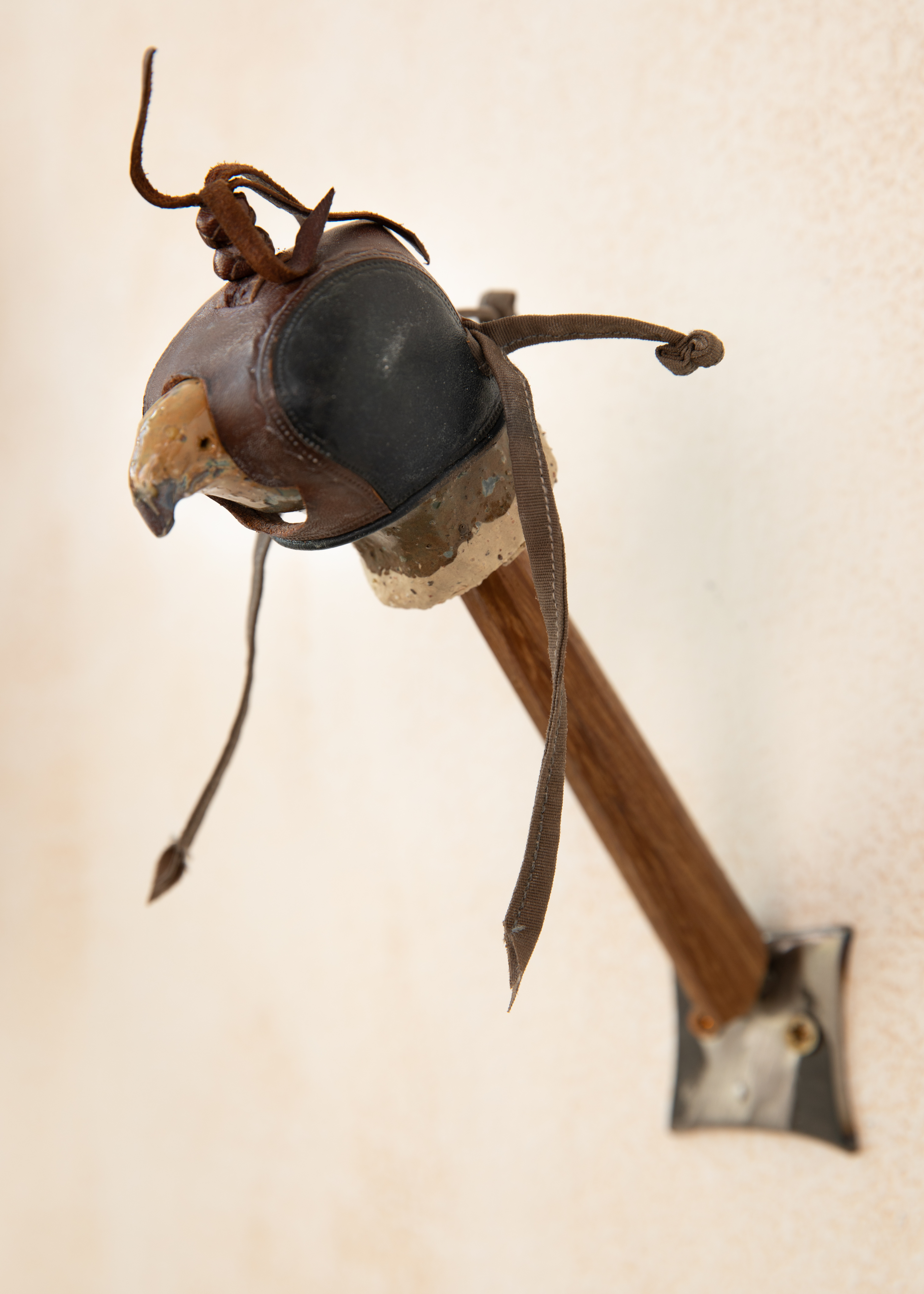
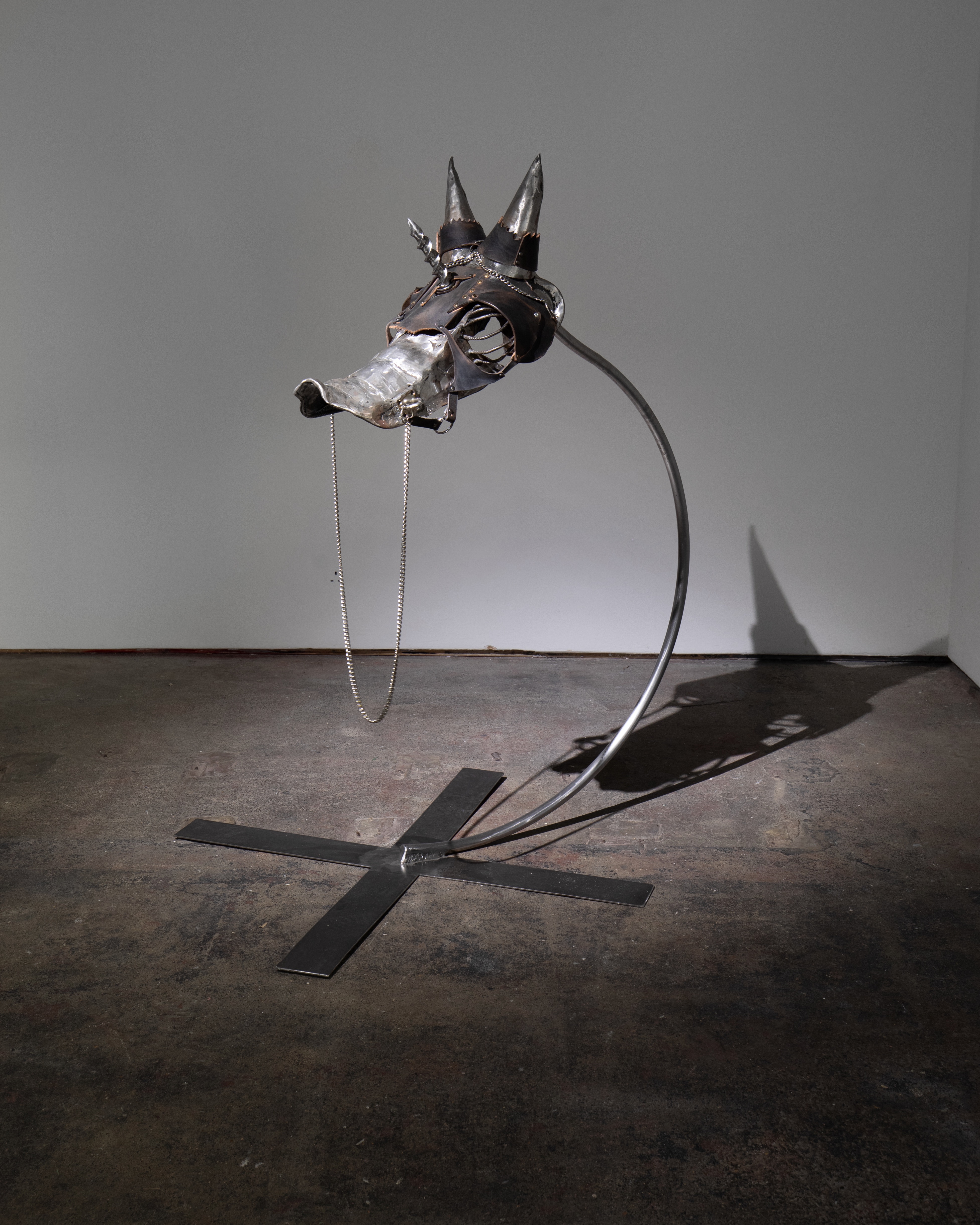
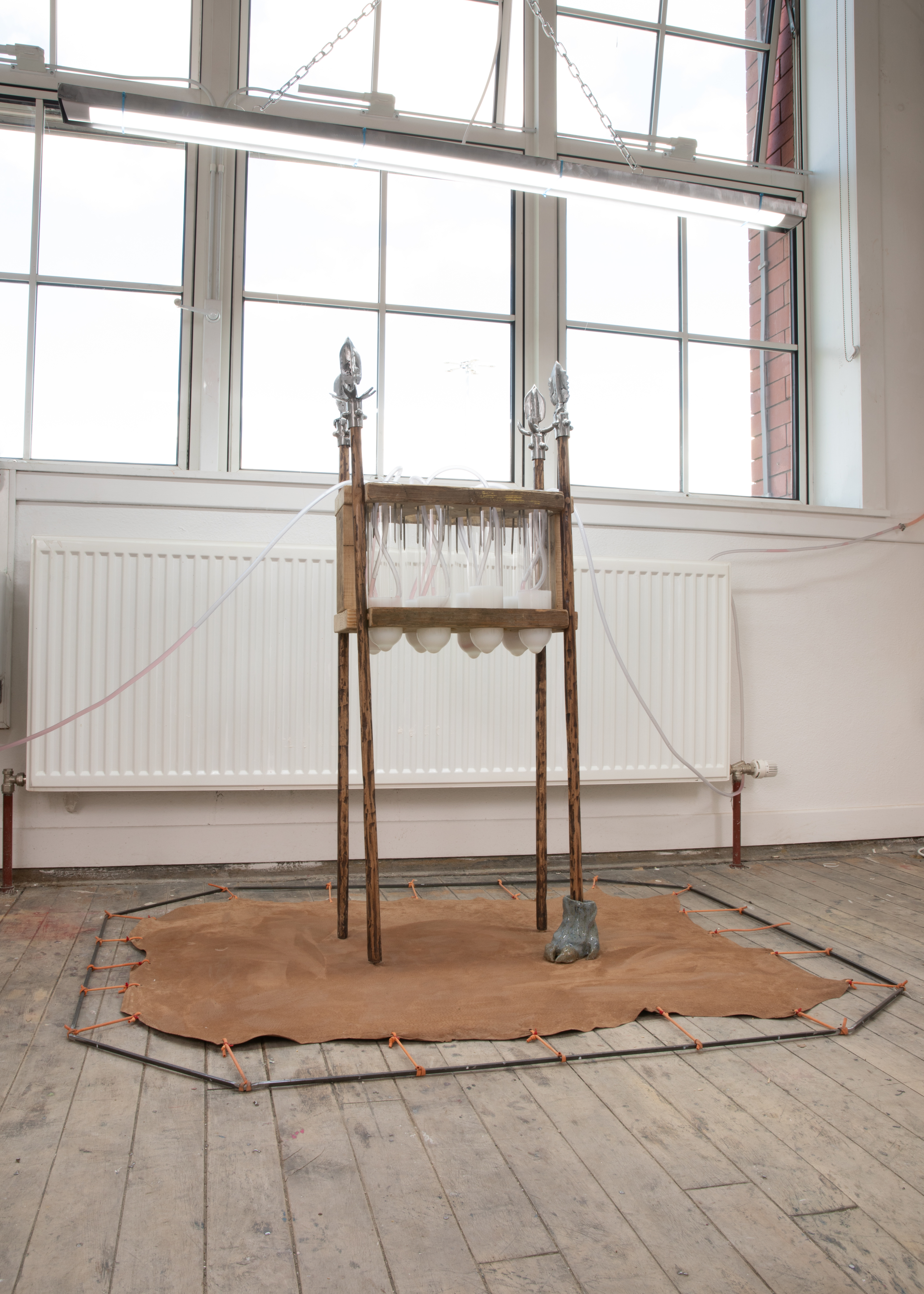
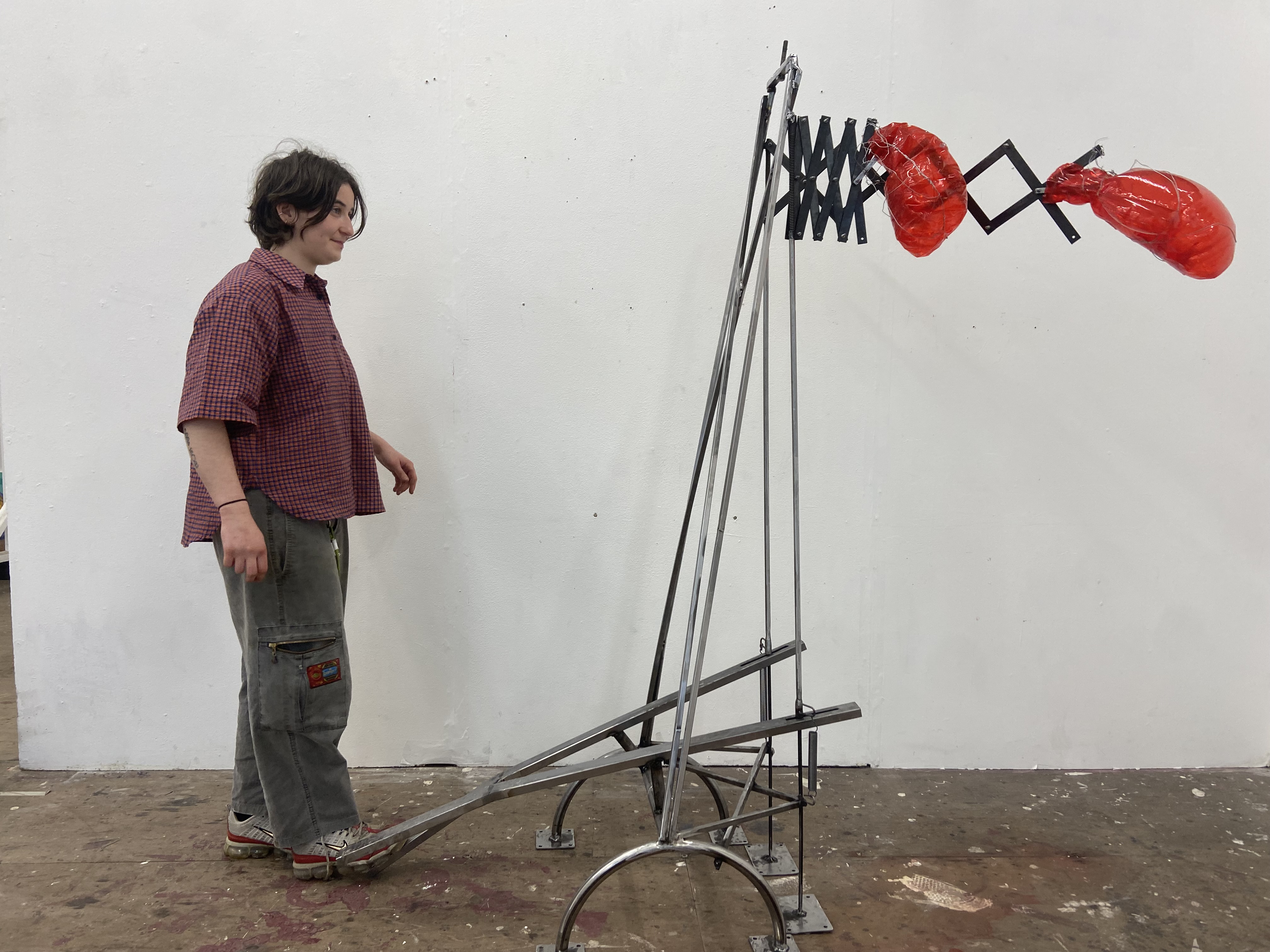
Glasgow-based multimedia sculptor Charli Kleeman works primarily with wood and metal, focusing on the physical labour embedded in these materials. This labour becomes central to their exploration of transmasculinity, anthropology, industrial and agricultural contexts, and the dynamics of alienation, domination, and subordination across human and non-human worlds. Their practice centres on the concept of trans-hypermasculinity, in which transmasculine people radically embody hypermasculine traits while simultaneously reinforcing and destabilising them. This focus developed through research into Scottish deer stalking and its framing as an ethical form of violence. Kleeman’ssculptures integrate references to hunting equipment, eighteenth-century laboratories, and the endurance of prey animals. Their degree show installation, ‘What If You Regret It', was created during a period of targeted removal of trans rights in the UK. The work reflects on bodily autonomy, DIY hormone production, bio-hacking, and the imperative to perform dominance as a means of survival.
Connor Bardsley-Hodgkiess
Connor Bardsley-Hodgkiess is a sculptor working primarily in clay and plaster, building on a strong foundation in printmaking. His practice centres on high relief and sculpture in the round, emphasising forms that hold both motion and the stillness of emotion. He reinterprets myths and classical narratives to examine emotionality, sexuality, and queer identity - dualities that are increasingly acknowledged within culture yet persistently othered. Drawn to sculpture’s capacity to hold oppositions - movement and rest, sensuality and restraint, fragility and permanence - he seeks to capture moments when emotion becomes tangible: when feeling acquires shape, weight, and texture. Much of his current work engages myth and classical narrative as frameworks for reimagining emotional and queer experience. Guided aesthetically by classical sculpture’s focus on anatomy, gesture, and material integrity, he also embraces an intuitive, process-led approach. Each piece evolves through making; initial concepts are continually reshaped by tactile interaction with material. This negotiation between control and release echoes the emotional contradictions at the core of his practice.
.jpg)
.jpg)
.JPG)
.JPG)
.jpg)
.JPG)
.JPG)
.JPG)
Dasha Chechushkova
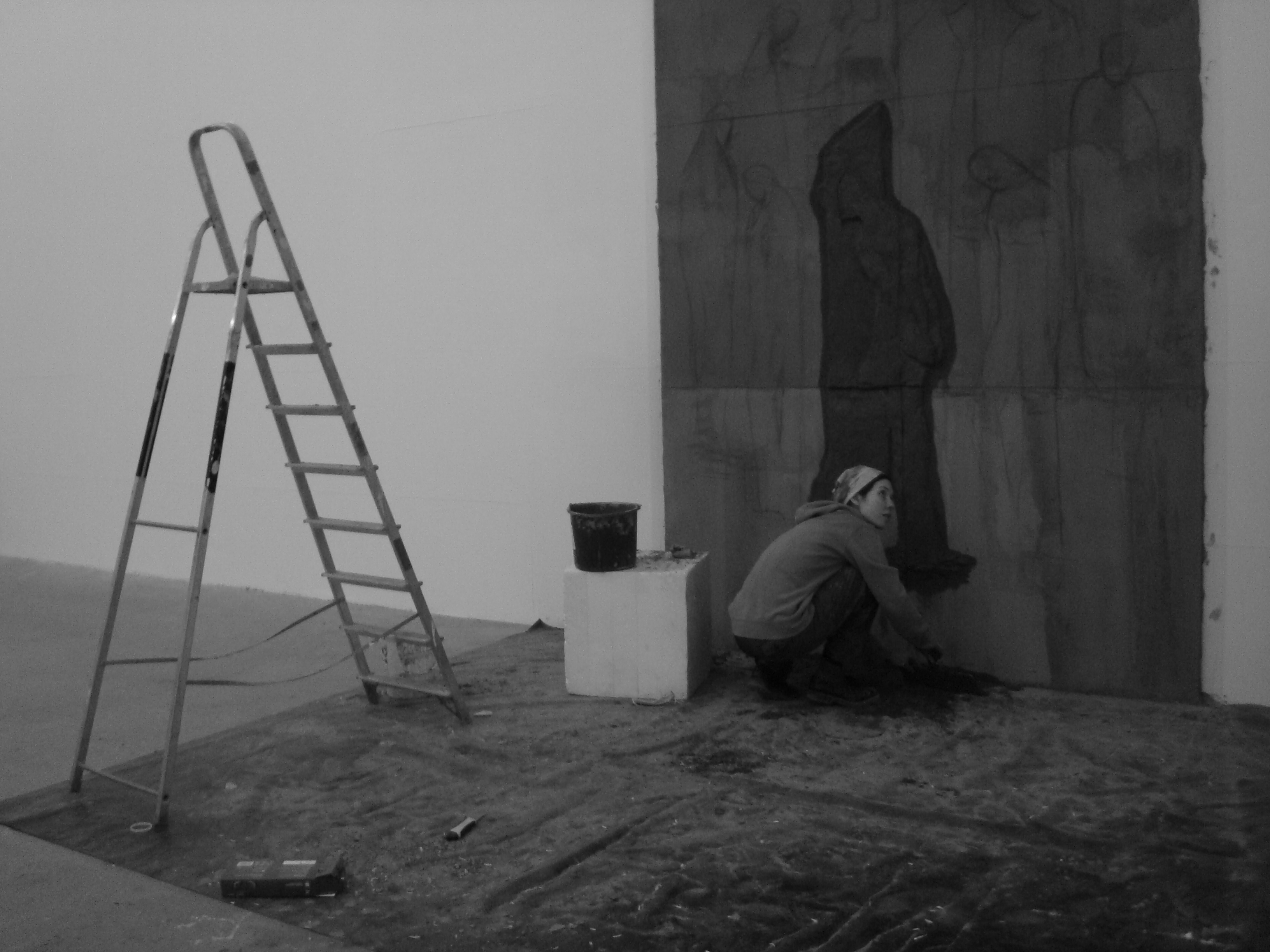
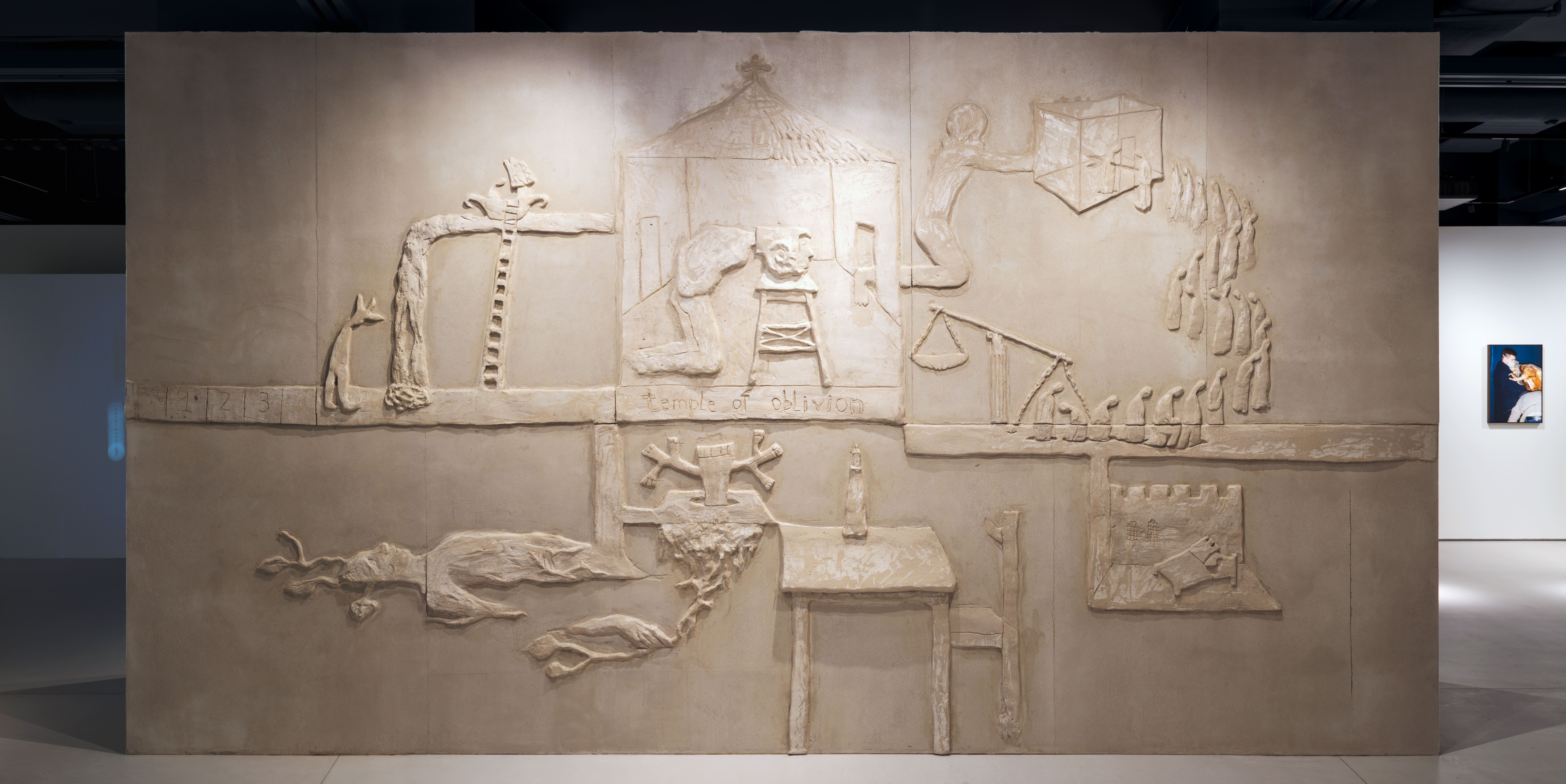
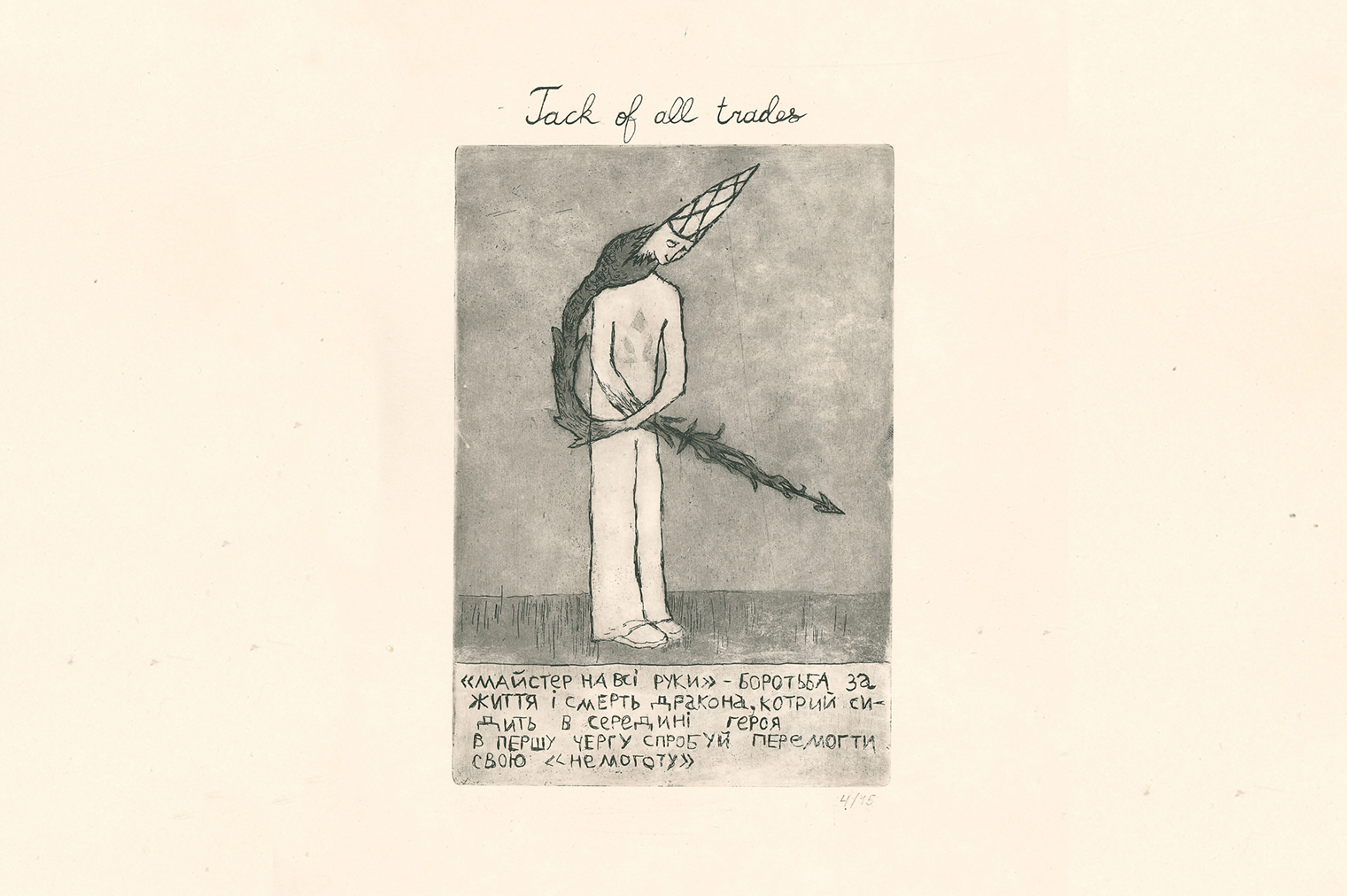
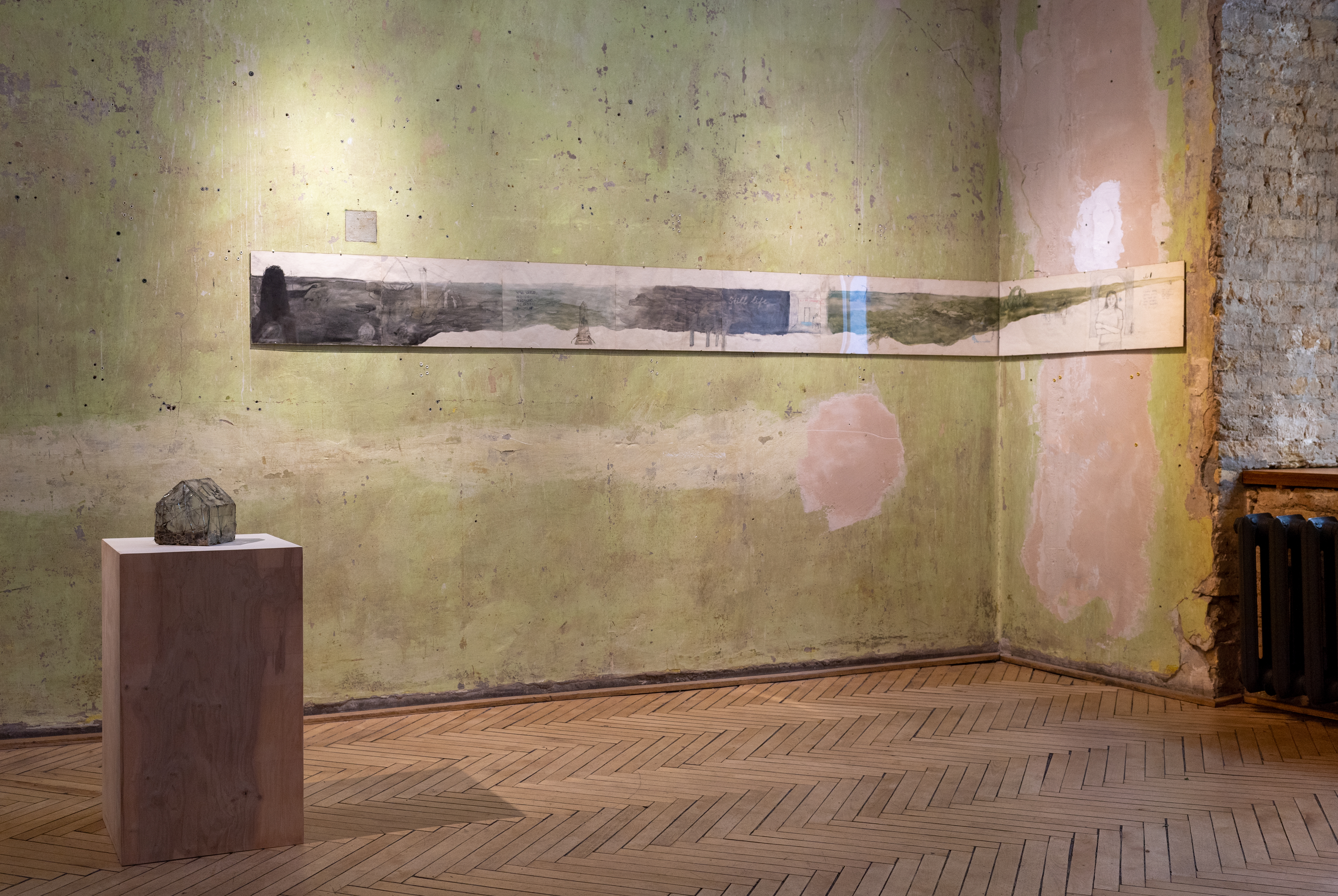
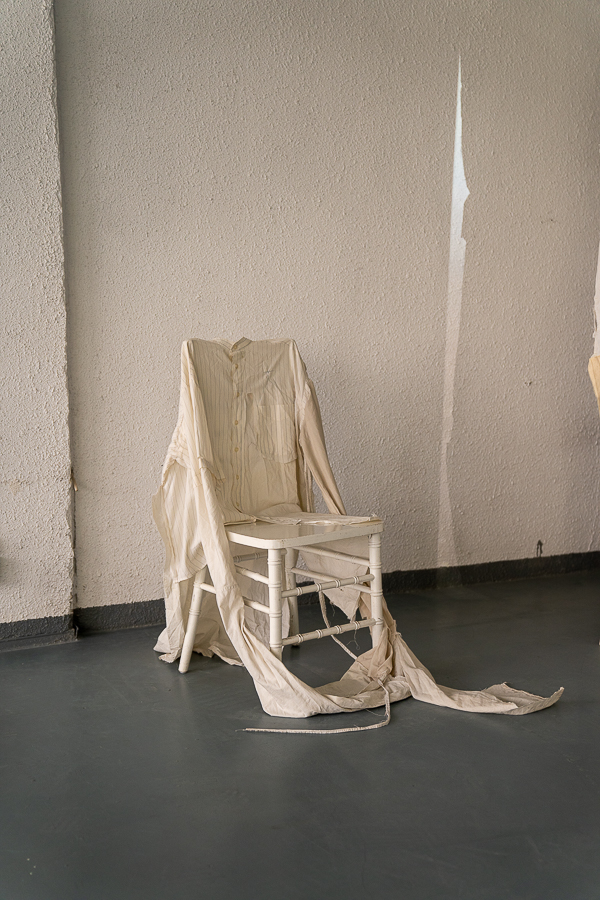
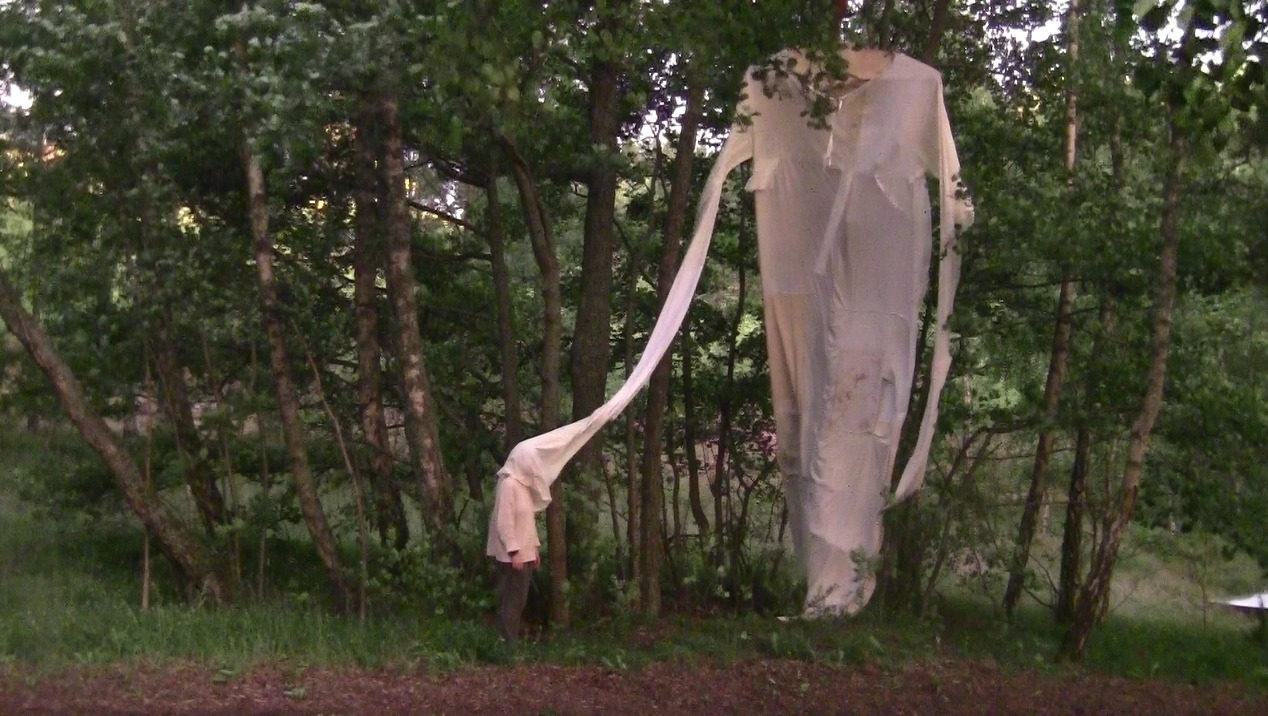
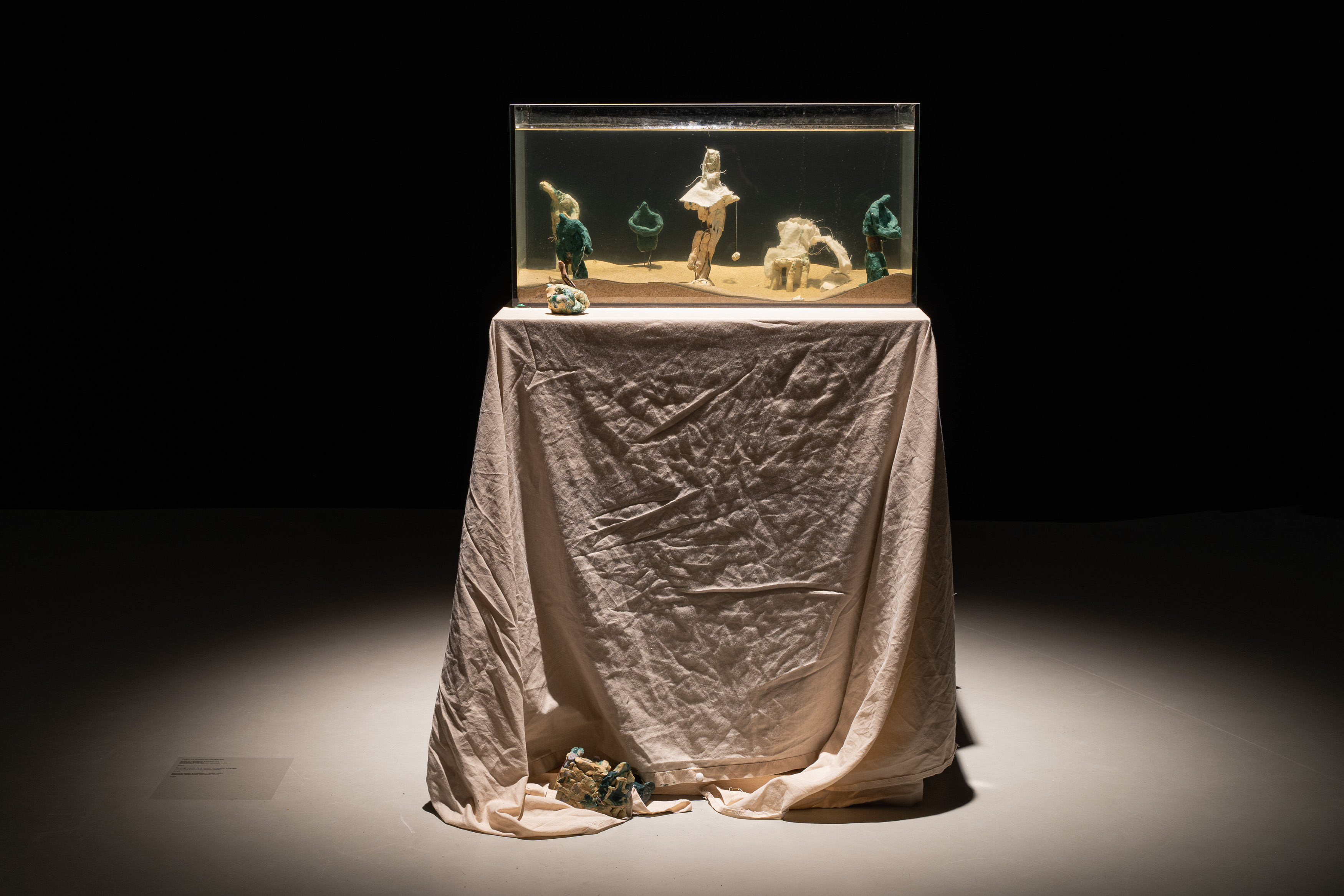
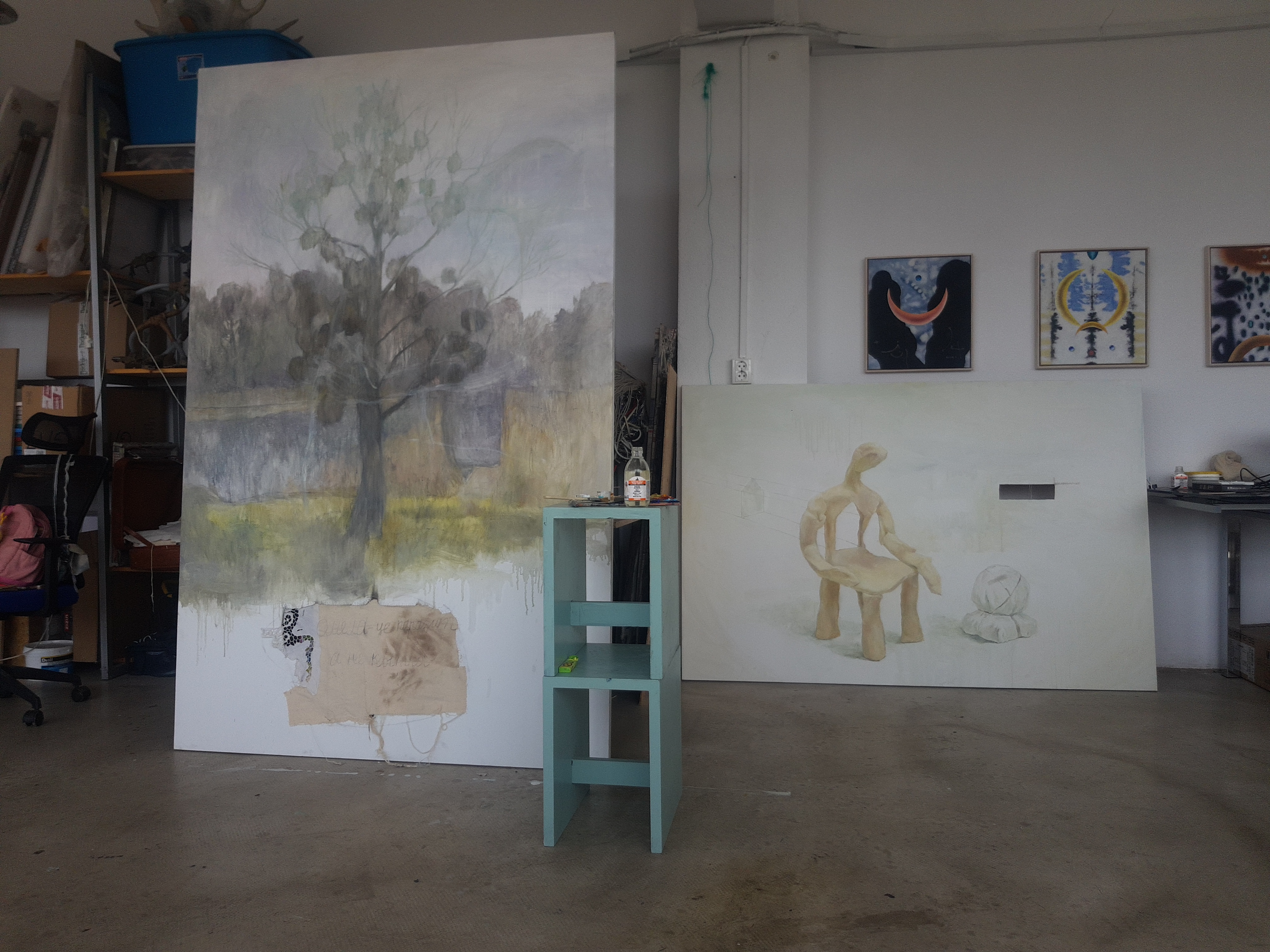
Dasha Chechushkova is an artist whose work unfolds through total installations and immersive “situations,” which she describes as “co-existence” or “co-event.” Her creative vocabulary spans drawing, painting, video, performance, text, and sculptural interventions, but at the heart of her work is a personal diary-notebook - a medium of constant availability and intimate recording. Her practice often builds entire environments: rooms, abandoned industrial spaces, or found structures - transforming them into experiential settings where the boundaries between everyday life, memory, myth and communal ritual blur. A defining period in her trajectory was her involvement with a creative community at an abandoned ship repair plant in Odesa, known as OSRZ-2. There she began to realise site-specific and situational works that engaged directly with space, ruin, memory and collective presence. In projects such as her ‘eco-renaissance’ series - which includes works like The Air Book, The Earth Book, and The Water Book - Chechushkova used unconventional media and performative gestures: painting on glass, underwater exhibition-actions, textile works, video-essays. These works weave together intimate diary fragments, collective histories, and symbolic, often folkloric, imagery to generate poetic, melancholic atmospheres. With the disruption of war, her work gained further layers of meaning: from documenting loss, displacement, and trauma, to reflecting on memory, rupture, and the fragility of domestic spaces. Now, Chechushkova’s ongoing practice explores the dynamics of memory, monumentality and liminality - how spaces, objects, and personal archives can carry stories of absence and presence, of what was, what persists, and what becomes transformed.
Elvey Anna Stedman
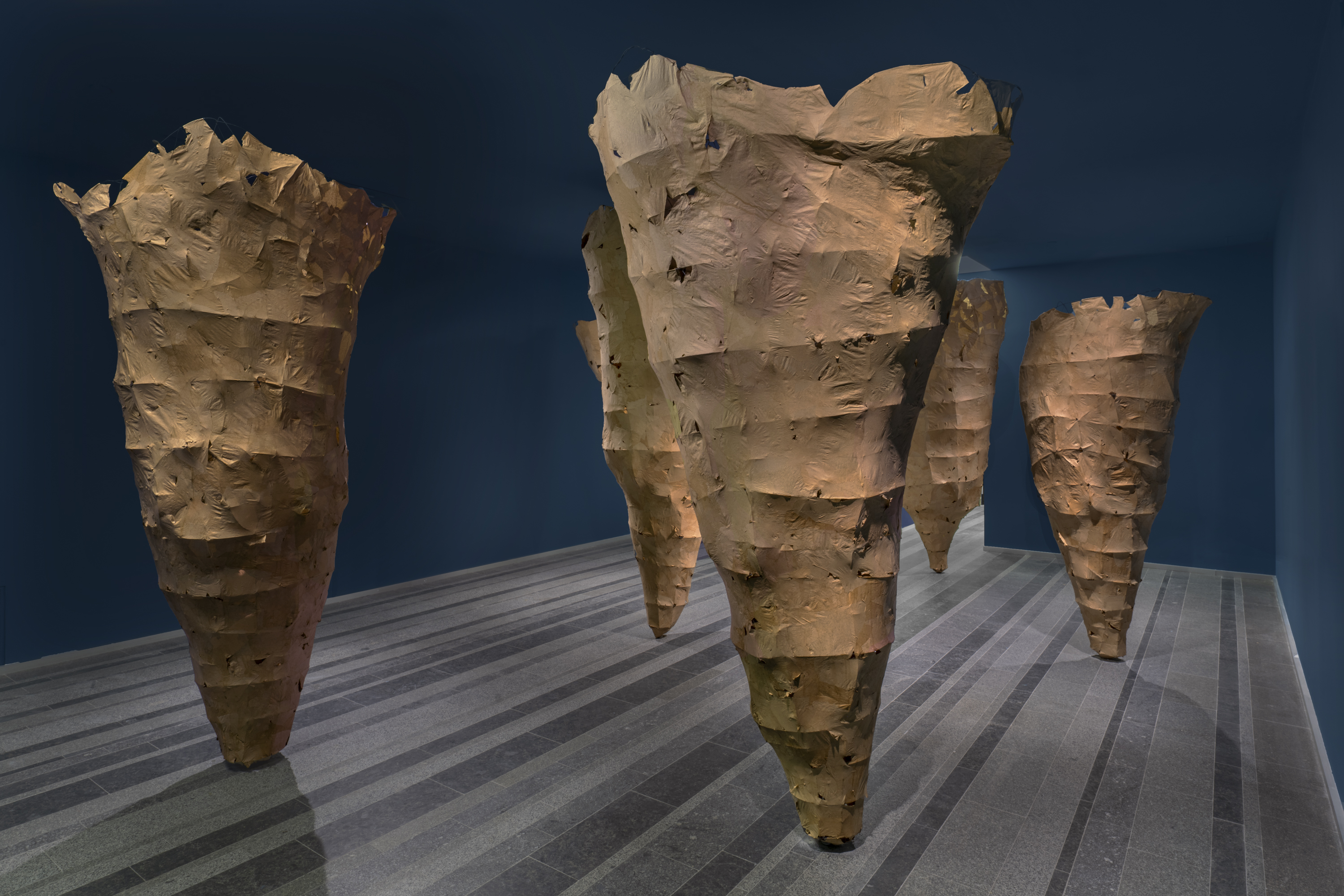
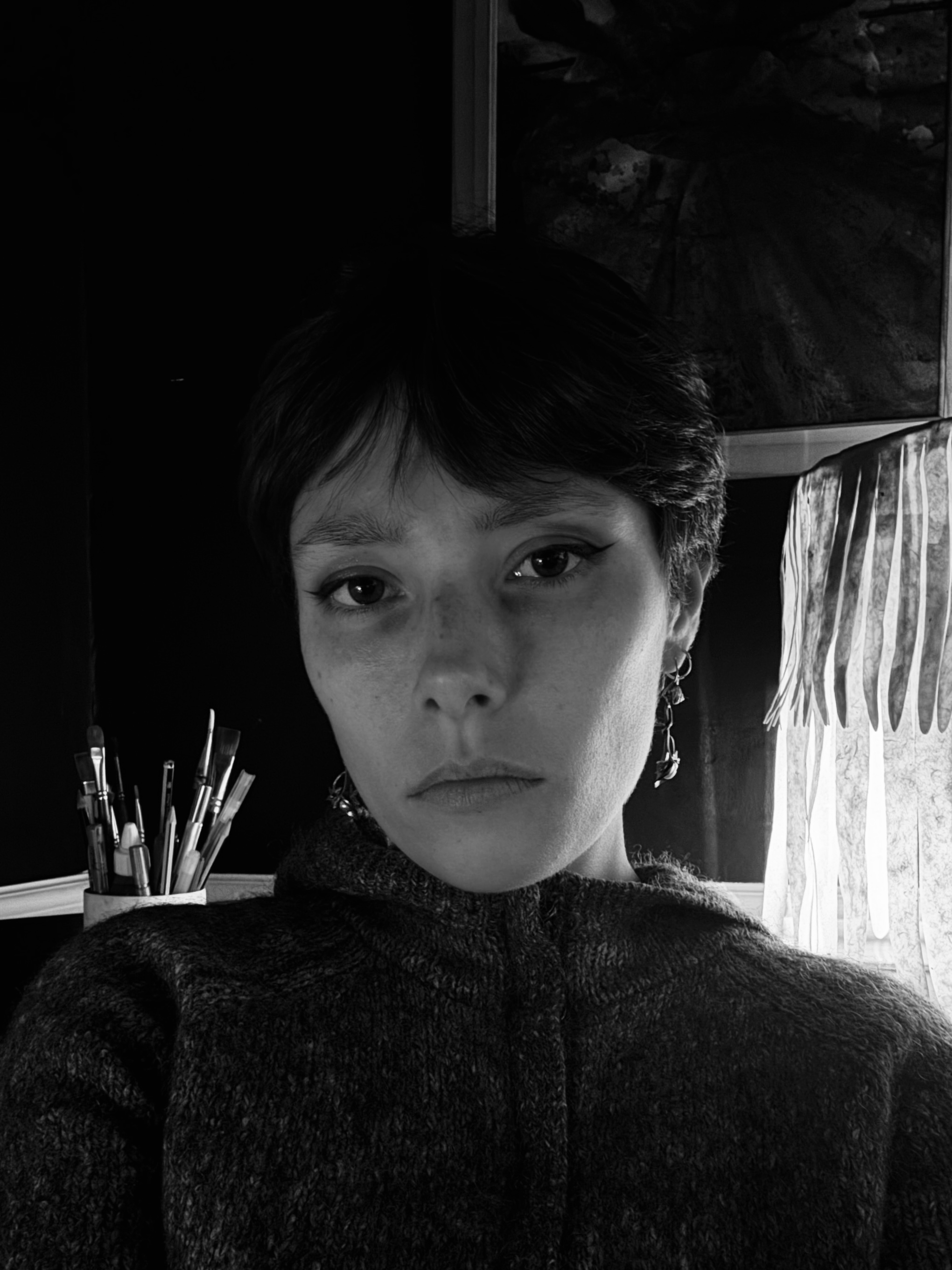
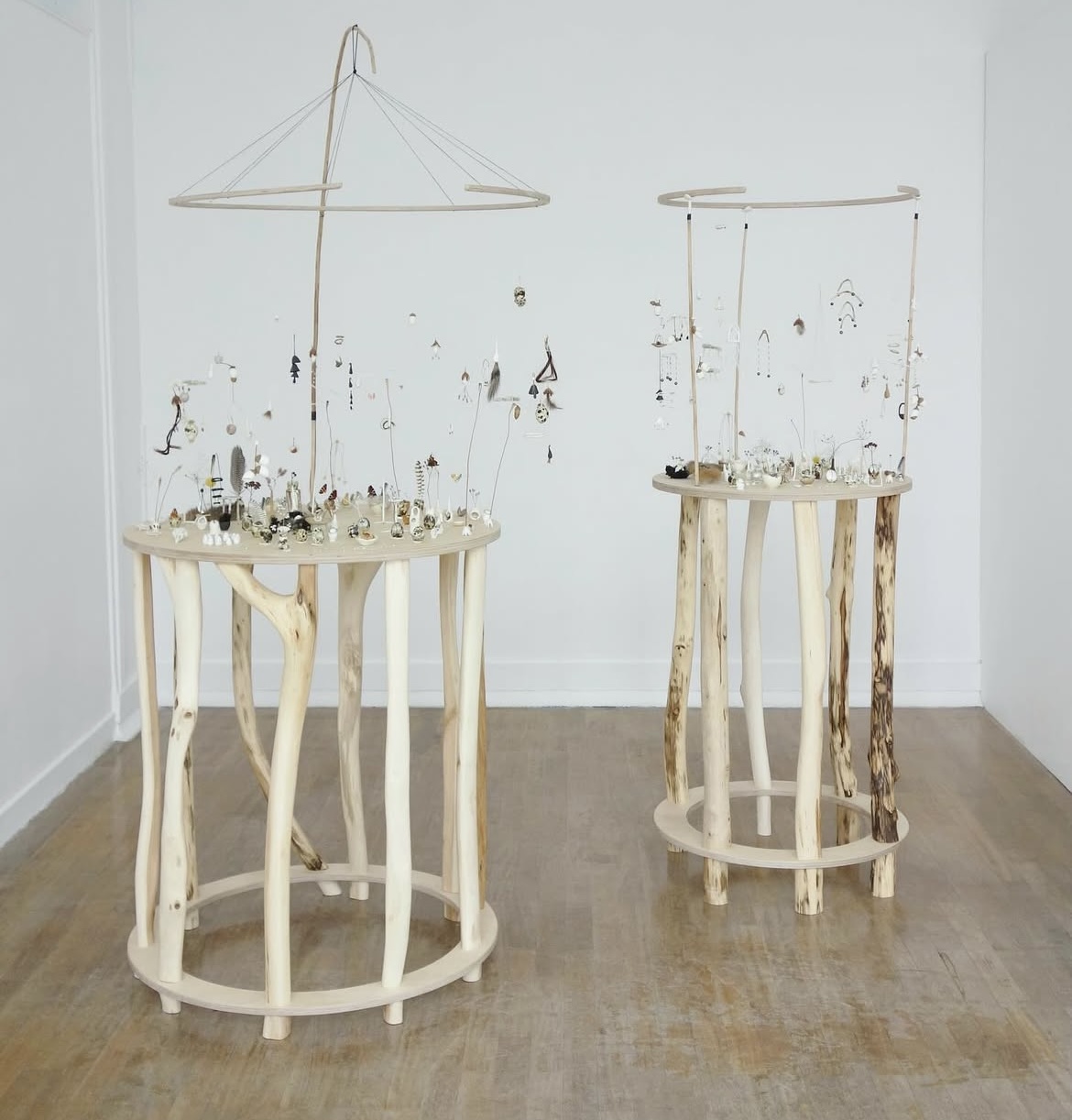
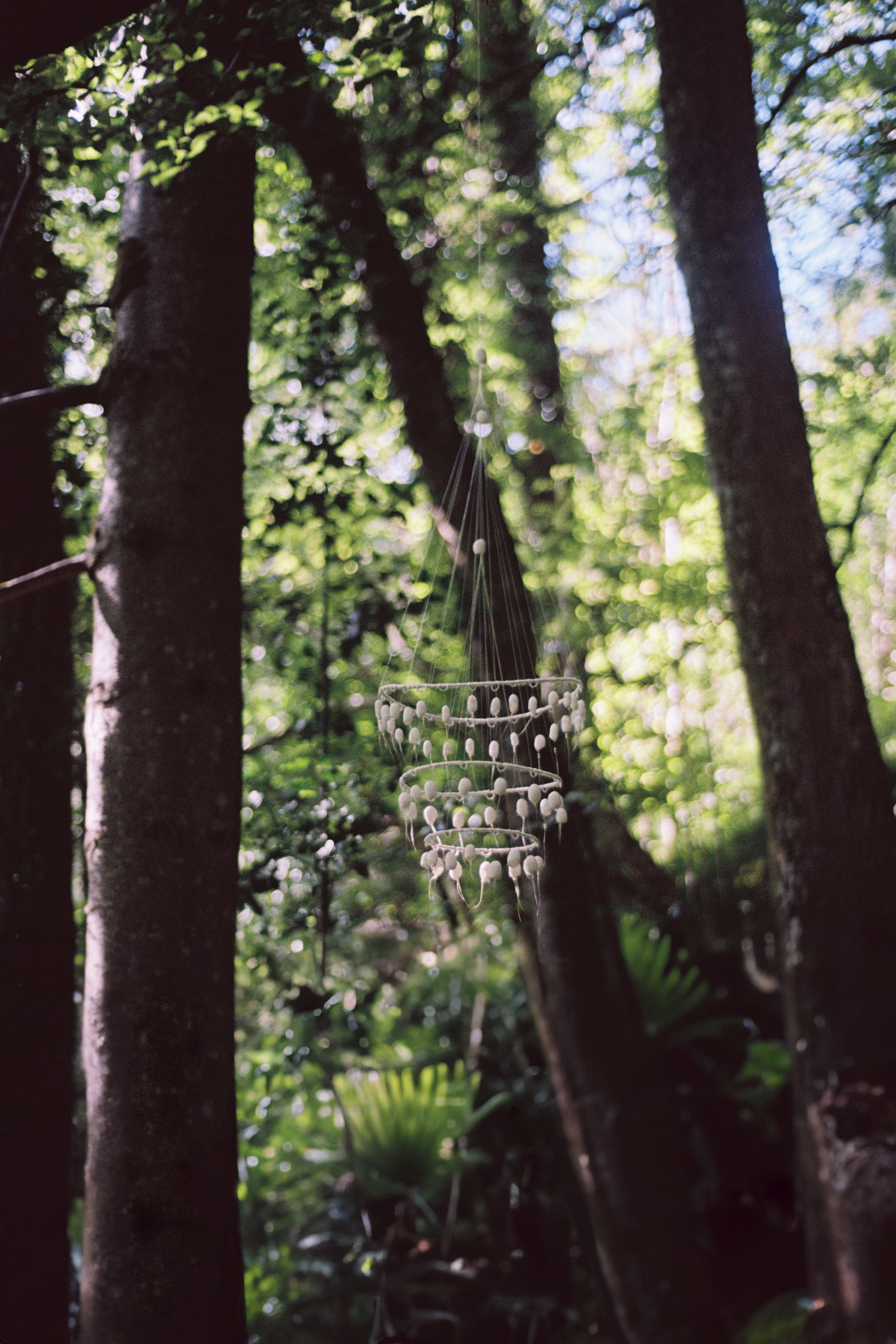
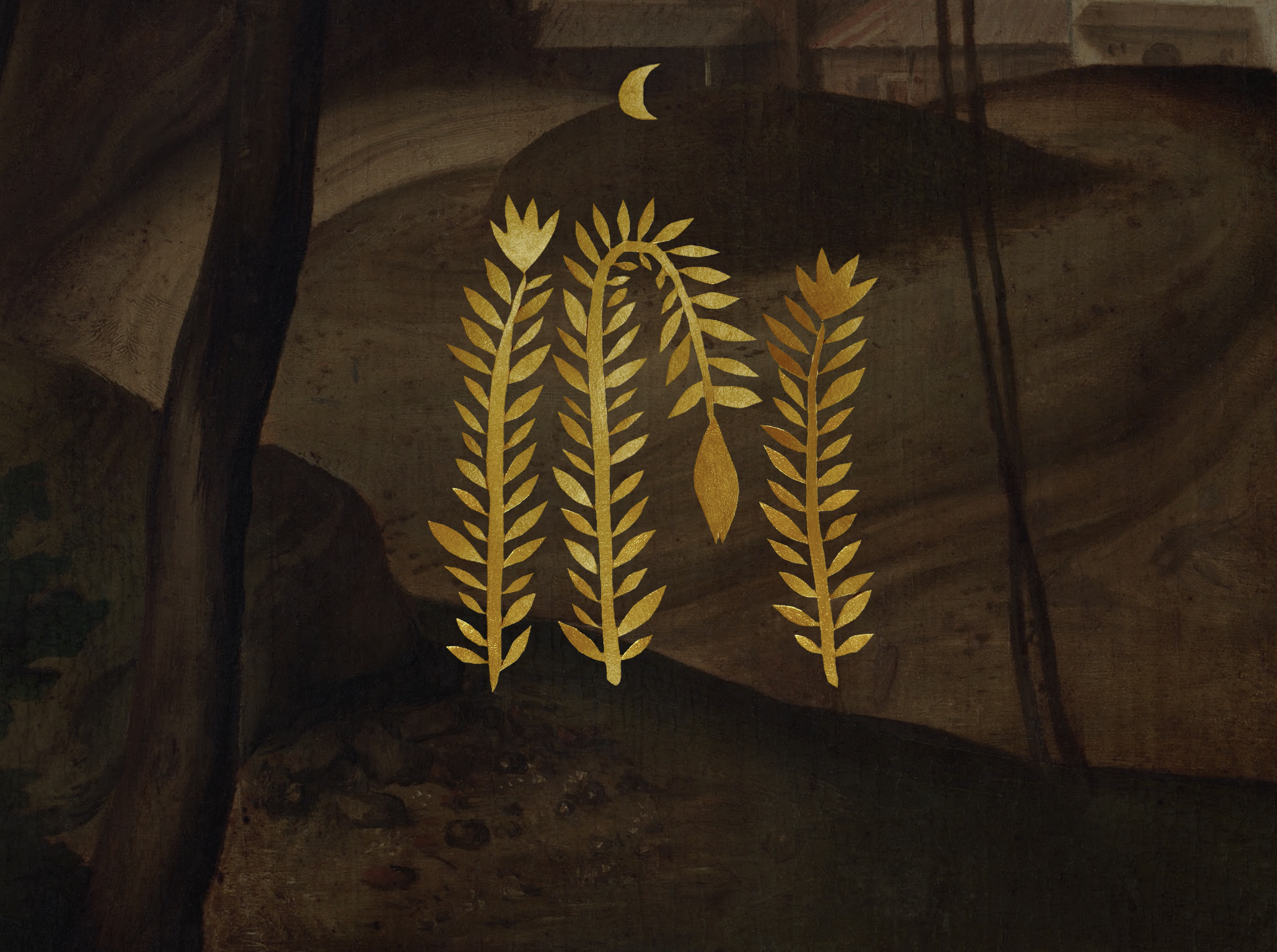
Elvey Anna Stedman is a Glasgow-based visual artist whose practice centres on fragility, transformation, and the tension between beauty and its potential destruction. Working across sculpture, performance, printmaking, and stop-motion animation, she constructs a personal, folkloric visual language that has accompanied her since childhood. This sensibility allows her to navigate the complex ways humans both connect to and distance themselves from the natural world. Her work often engages with delicate or unstable forms, exploring how systems of beauty can be simultaneously revered and threatened. By bringing together handcrafted objects, performative gestures, and subtle narrative elements, Stedman creates atmospheres where vulnerability becomes a site of meaning rather than weakness. Her materials and processes echo the rhythms of natural cycles - growth, decay, resilience - while also reflecting on how environmental anxieties shape contemporary perception. Through this multi-layered approach, Stedman cultivates an artistic language that is introspective yet expansive, grounded in both personal memory and broader ecological concern. Her practice invites viewers to consider the fragile thresholds between protection and harm, enchantment and loss, and the persistent human desire to seek connection within a world in flux.


Ivan Mudrak
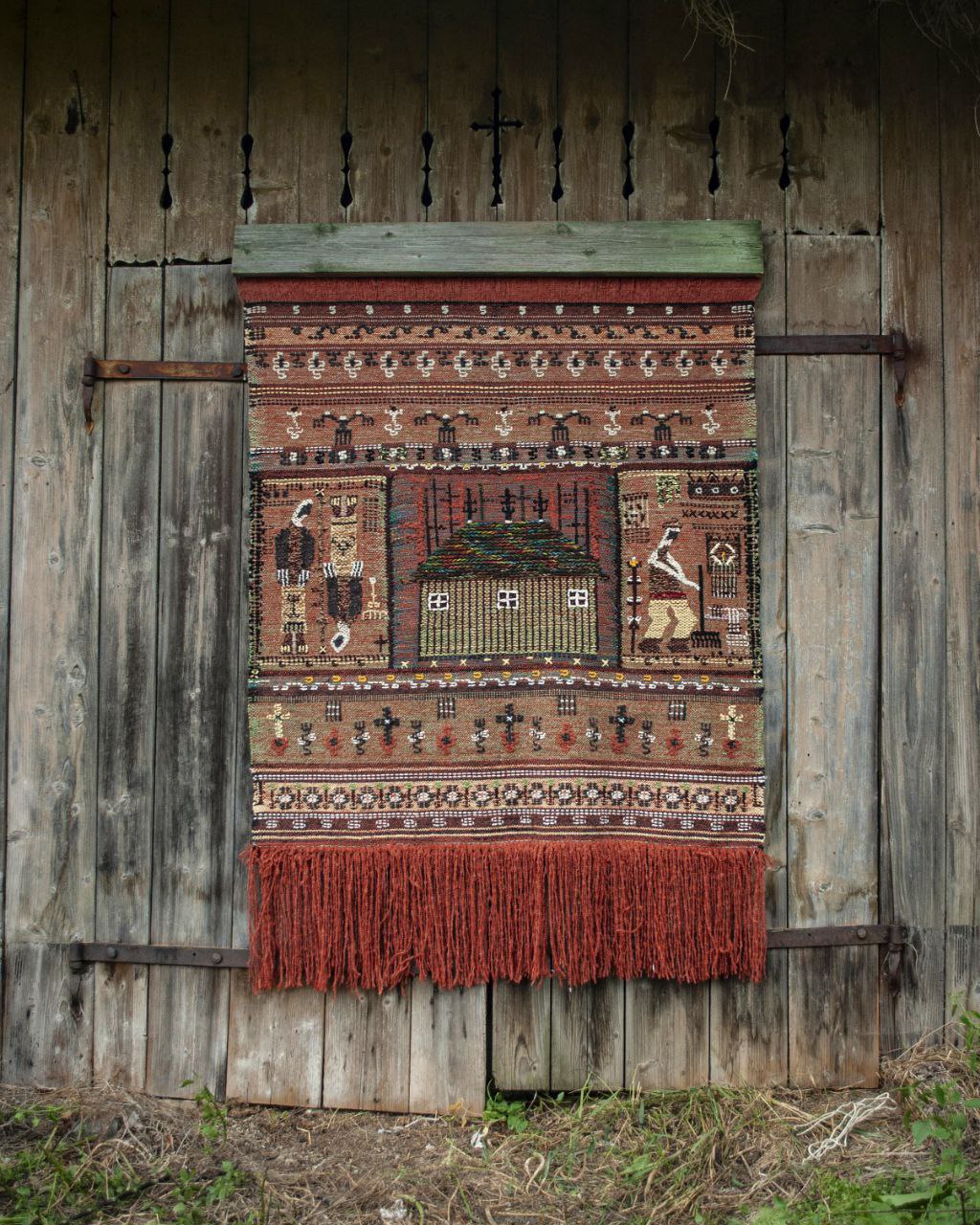
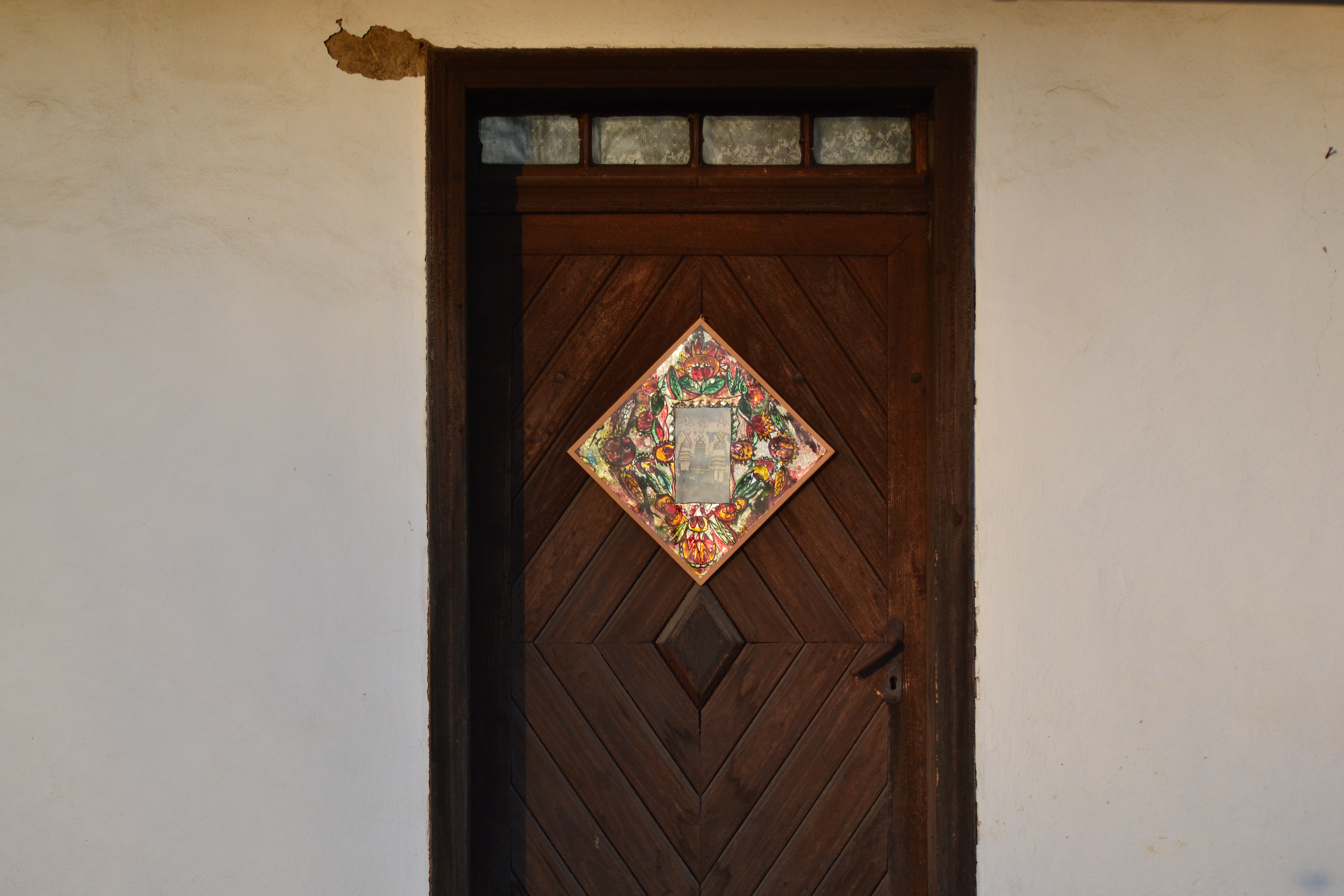
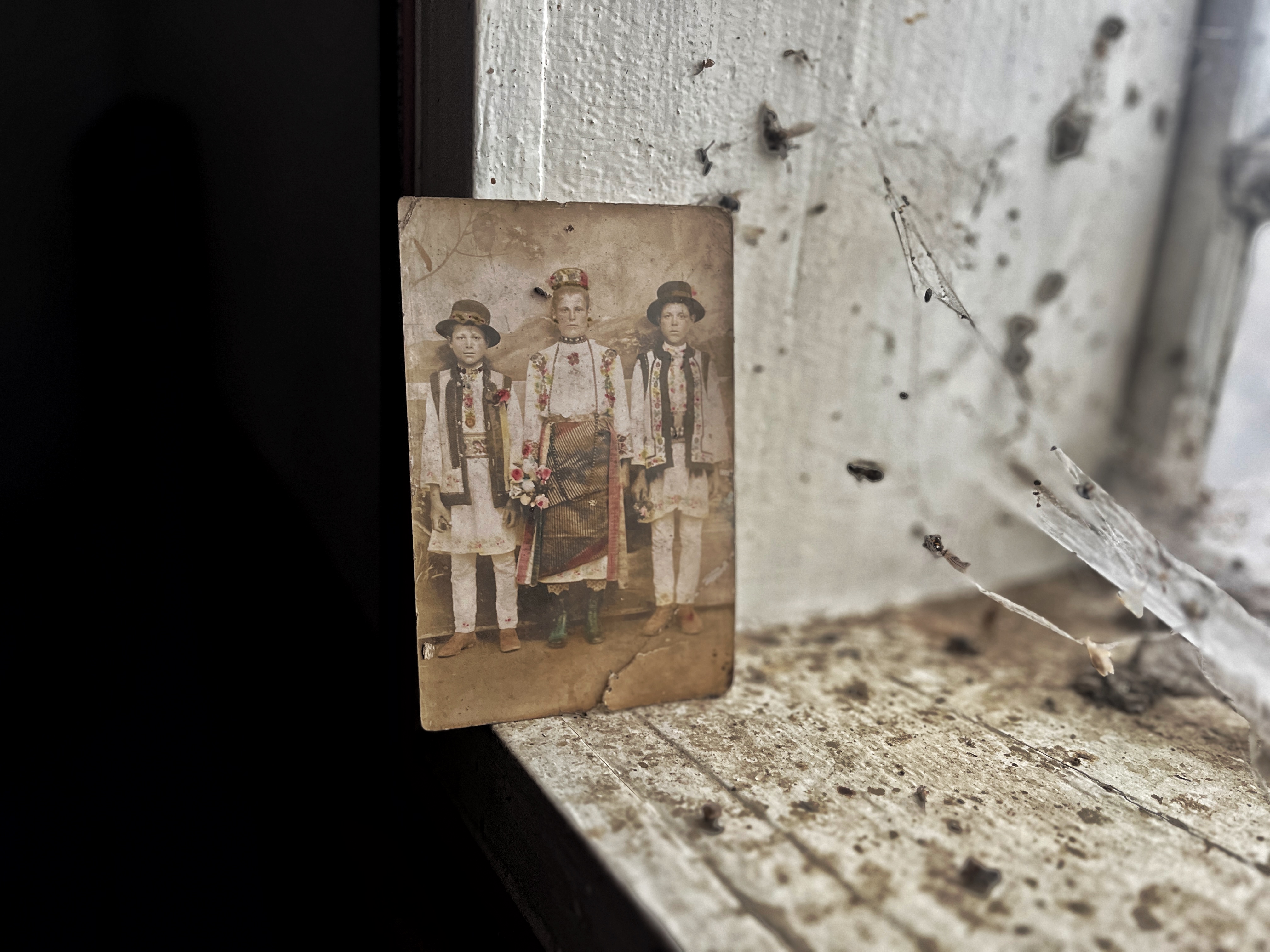
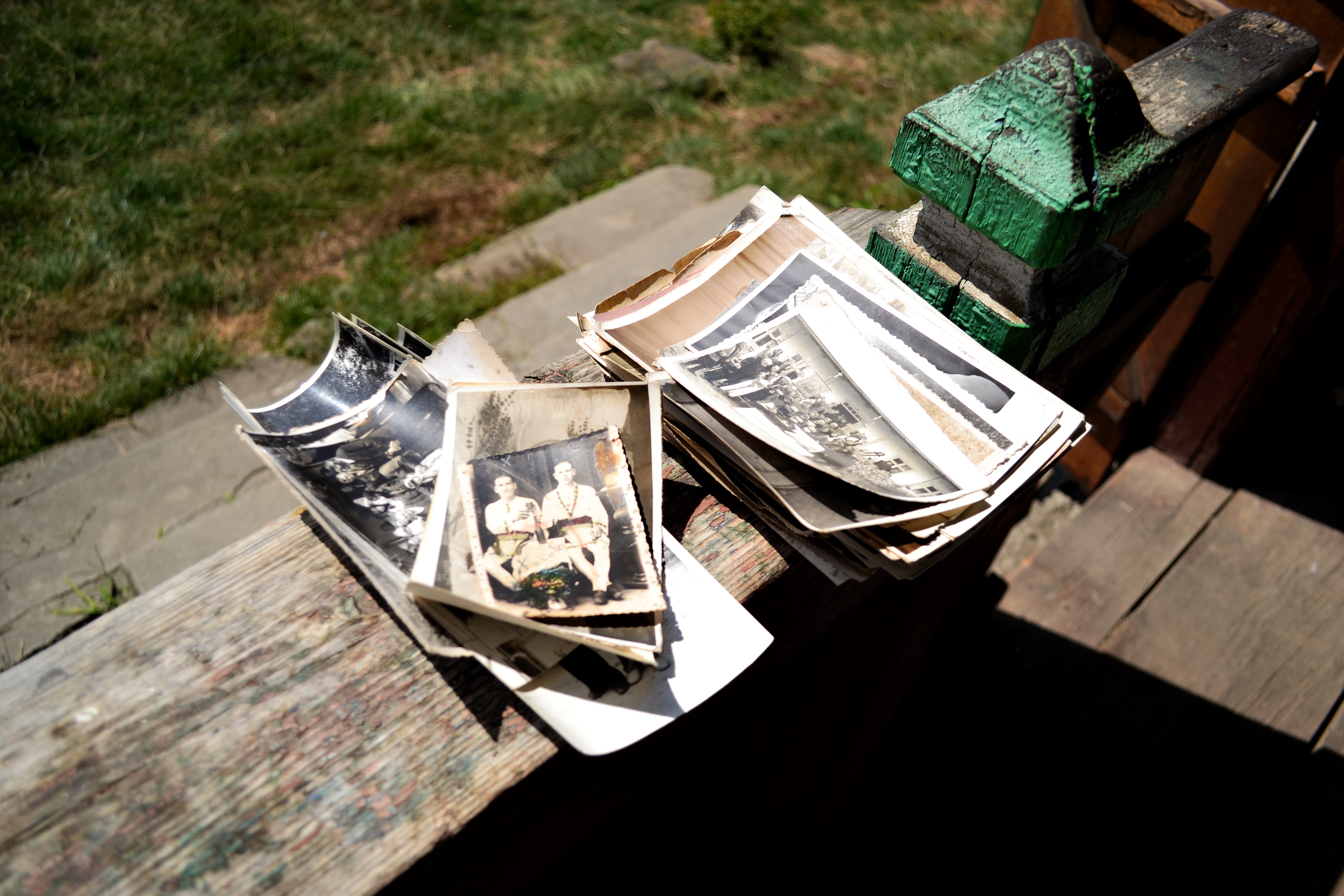
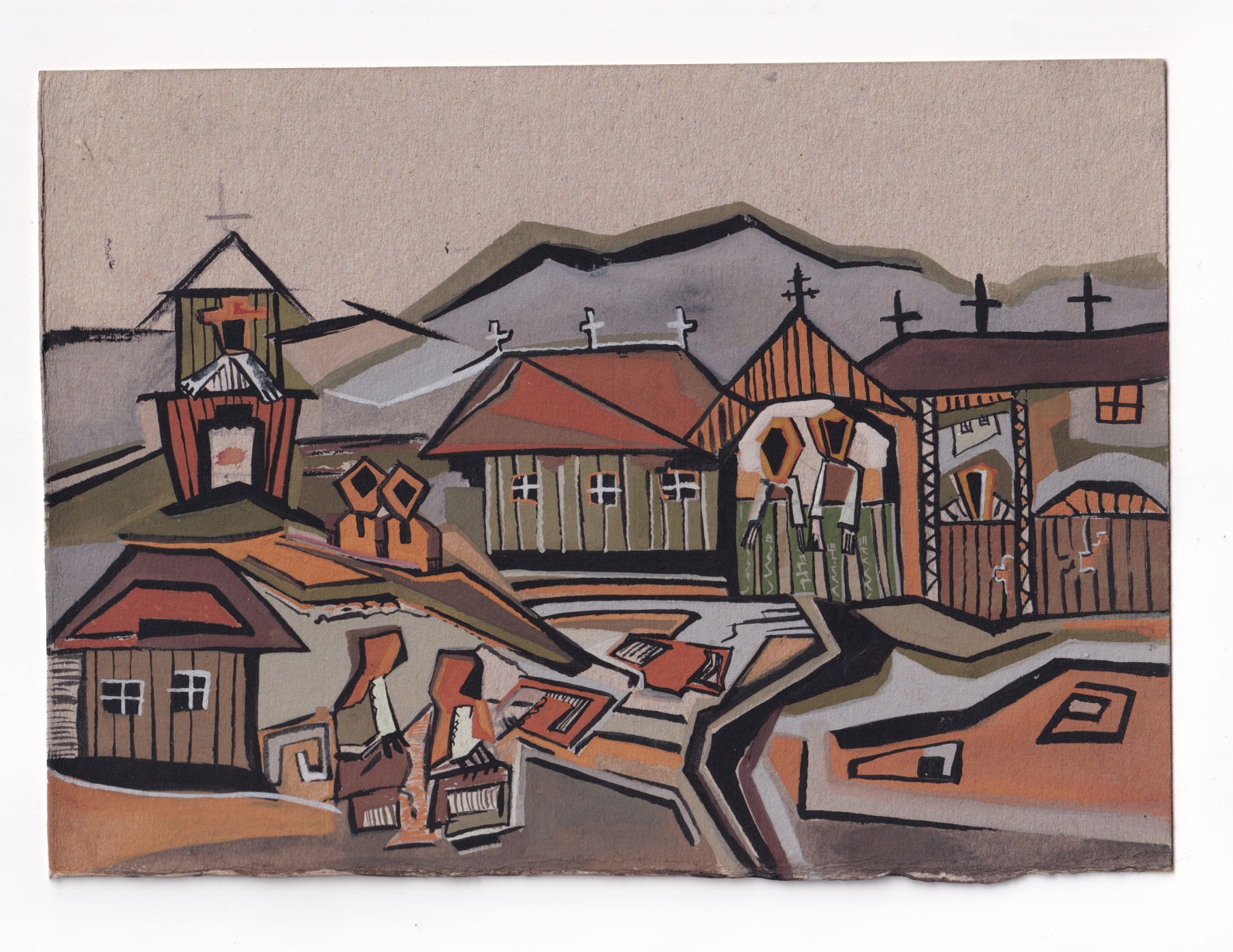
Ivan Mudrak is a textile artist, photographer, and researcher of Bukovynian culture whose practice weaves together fieldwork, visual art, and experimental textile-making. His work centres on the long-term ethnographic project ‘Babyn Buchok’, through which he studies family archives, oral histories, and overlooked weaving techniques from the Bukovyna region. ‘Babyn Buchok’ documents both the material and spiritual dimensions of local weaving traditions - from household textiles and ritual fabrics to the tools, gestures, and forms once used by regional artisans. Grounded in research conducted in mountain villages, the project reveals the intricate ties between textile production, memory, and identity. Mudrak not only preserves endangered practices but reimagines them within a contemporary artistic framework, establishing a living dialogue between past and present. Through exhibitions, workshops, and multimedia work, ‘Babyn Buchok’ becomes a platform for community engagement, drawing attention to the cultural significance of craft and to the resilience and poetic charge held within everyday materials and manual labour.
Ksenia Biliyk
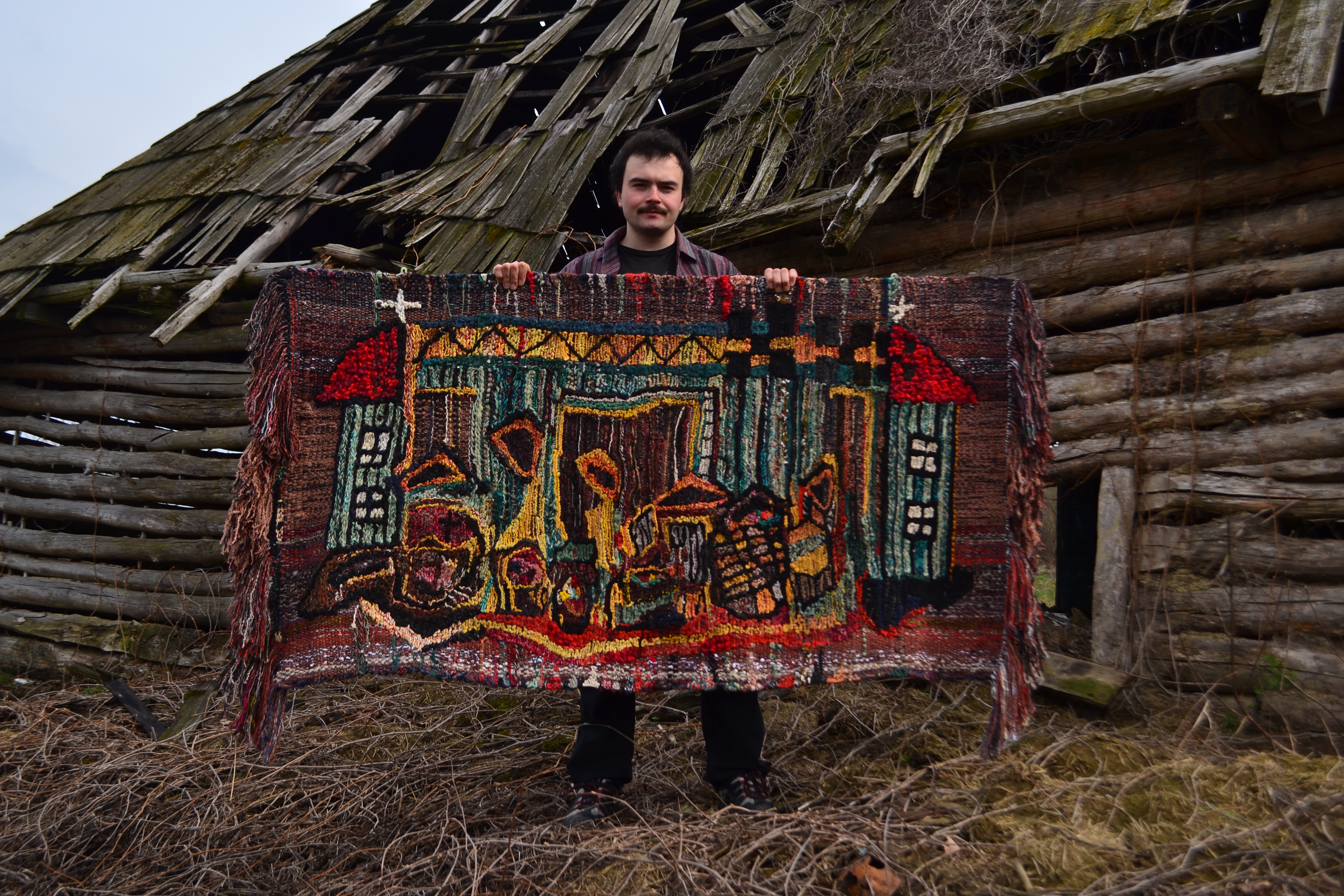
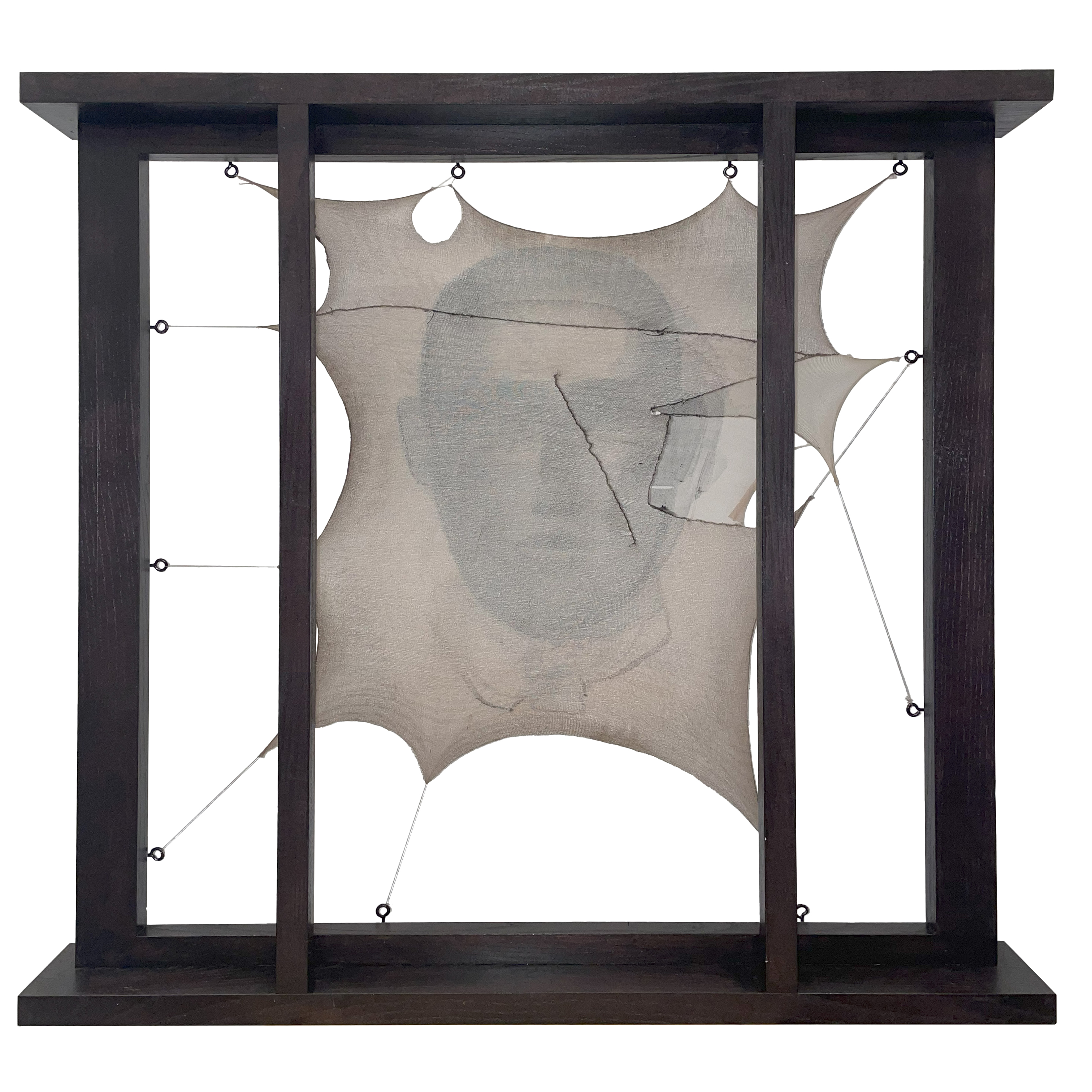
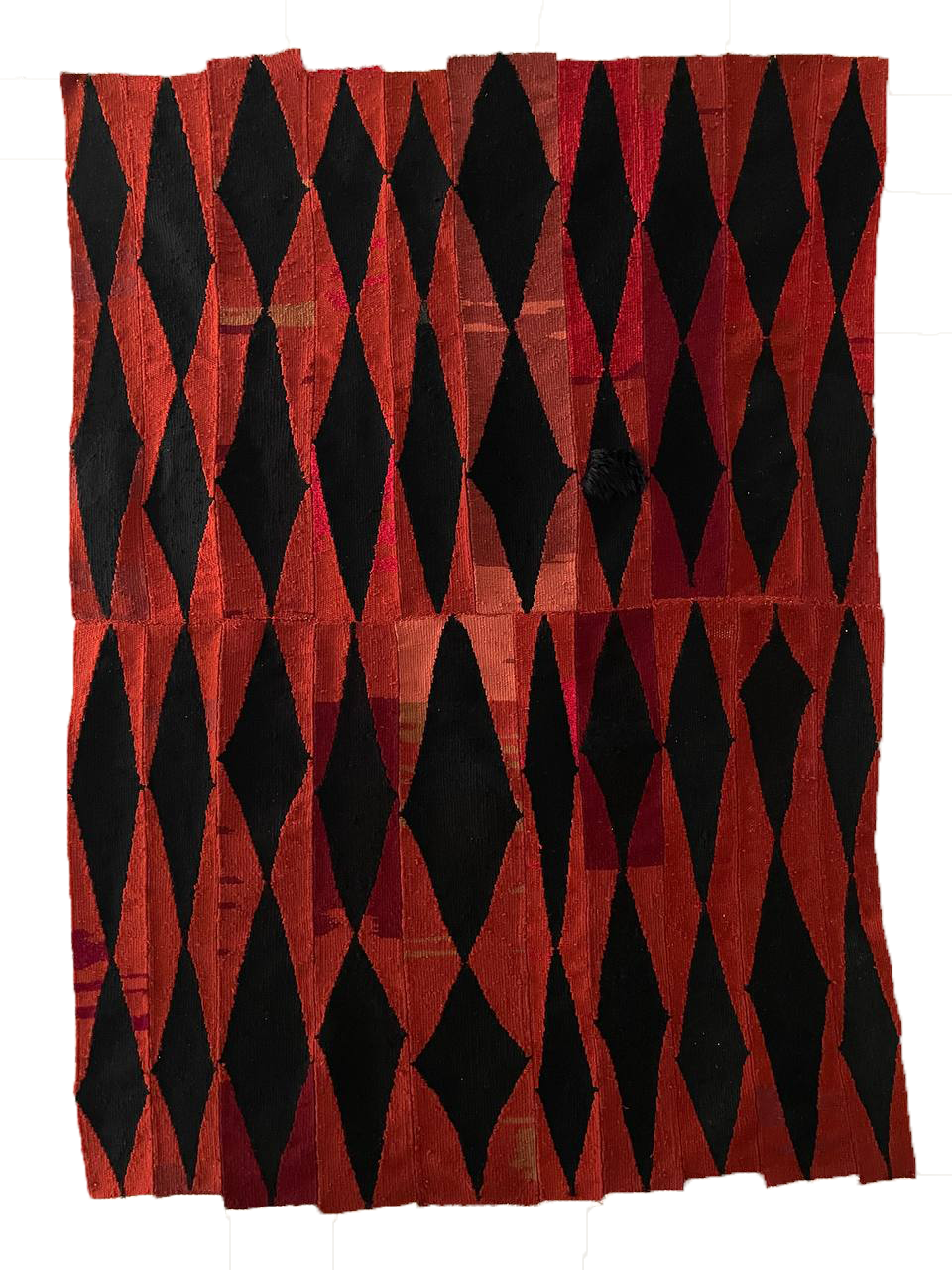
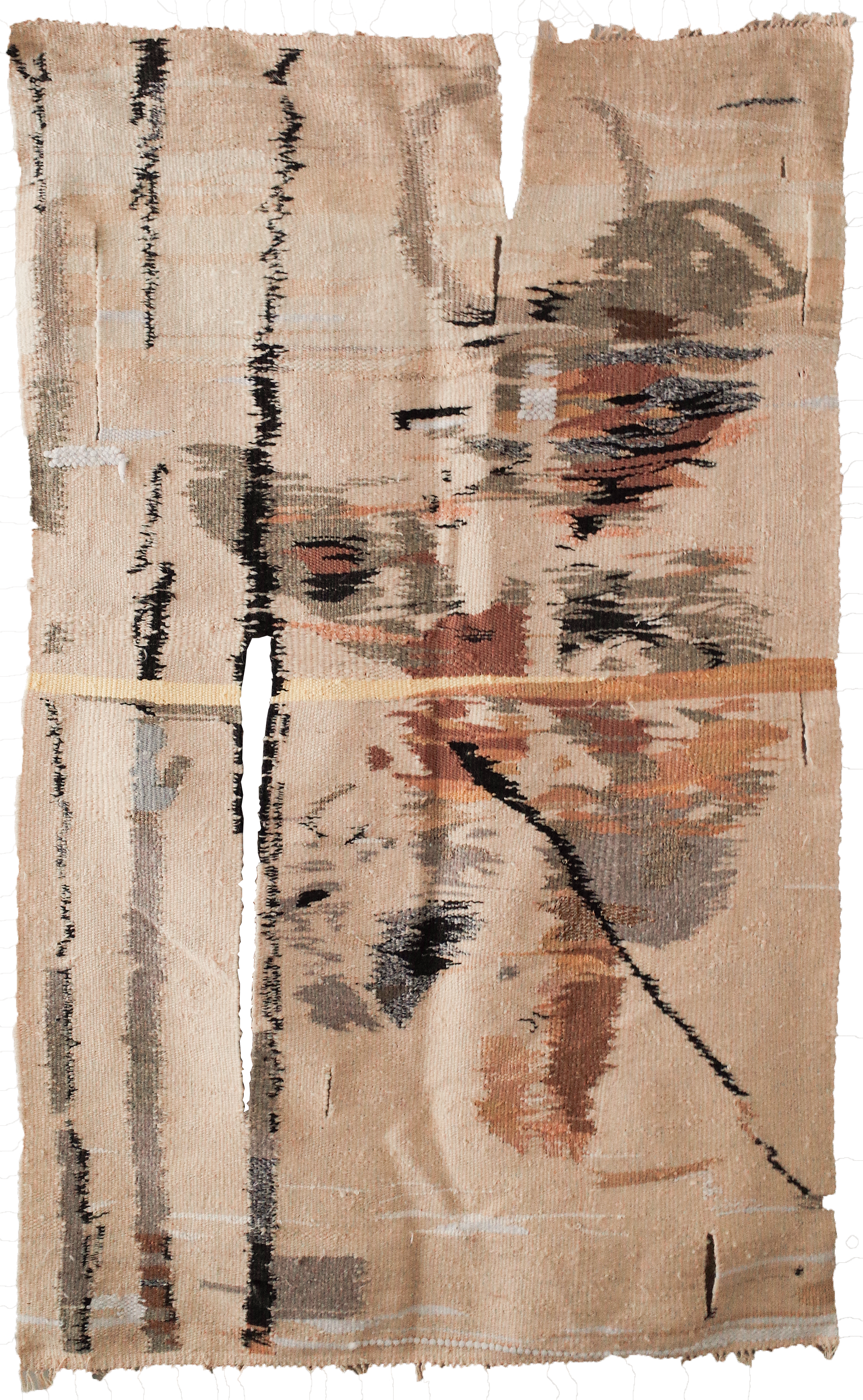
Ksenia Bilyk creates large-scale handwoven canvases that draw on tapestry, wool, and textile techniques to explore the psychological, historical, and environmental conditions of contemporary Ukrainian life. Her practice often engages with themes of urban transformation, medical and biological imagery, and the traces left by violence and regeneration within the fabric of the modern city. Working through tactile, labour-intensive processes, Bilyk uses softness to approach subjects that are often sharp, confrontational, or politically charged. Her tapestries reinterpret familiar forms - architectural silhouettes, anatomical structures, symbols from collective memory - subtly distorting them to access the unconscious layers of perception. By translating hard or unsettling concepts into textile, she destabilises visual assumptions and invites viewers into an encounter that is at once disarming and intimate. While individual works, such as her diptych ‘Stone Cossack Cross’, reflect on specific histories and cultural markers, Bilyk’s wider practice is situated within a contemporary rethinking of Ukrainian heritage and identity. She investigates how images circulate, mutate, and become embedded in public consciousness, and how textile - with its warmth, vulnerability, and resilience - can serve as a medium for challenging mass narratives and reclaiming cultural meaning. Across her work, Bilyk positions tapestry not as decorative tradition but as a critical practice, one capable of holding complexity, reframing memory, and offering new modes of reflection through the materiality of wool, thread, and handwoven form.



Maksym Son
Maksym Son is an artist whose practice explores the intersections of nature, memory, and contemporary expressions of folk culture. Emerging from a background in graffiti and street art, his early engagement with public space shaped an intuitive approach to mark-making, symbolism, and visual rhythm. This foundation now informs a broader, more exploratory practice that spans graphics, collage, sonic experimentation, video, and photography. Maksym’s work often draws on landscapes and natural forms, merging them with fragments of recollection, symbolic motifs, and graphic interventions. By layering imagery and sound, he rebuilds moments of quiet observation into complex visual fields, where everyday spiritual practices - gestures, rituals, encounters with nature - become points of connection between the personal and the collective. His recent projects investigate how memory is inscribed in place: how a horizon line, a field, or a fleeting pattern of light can hold cultural resonance. Working across mediums, Maksym cultivates a practice attuned to the subtle interplay between environment and perception. He explores the possibility of contemporary folk language - not as revival, but as an evolving system of signs shaped through lived experience. Through this lens, his art becomes a continuous study of presence, reflection, and the shifting relations between human beings and the landscapes they inhabit.
.JPG)
.JPG)
.JPG)
.JPG)
.JPG)
.JPG)
.JPG)
Tamara Turliun
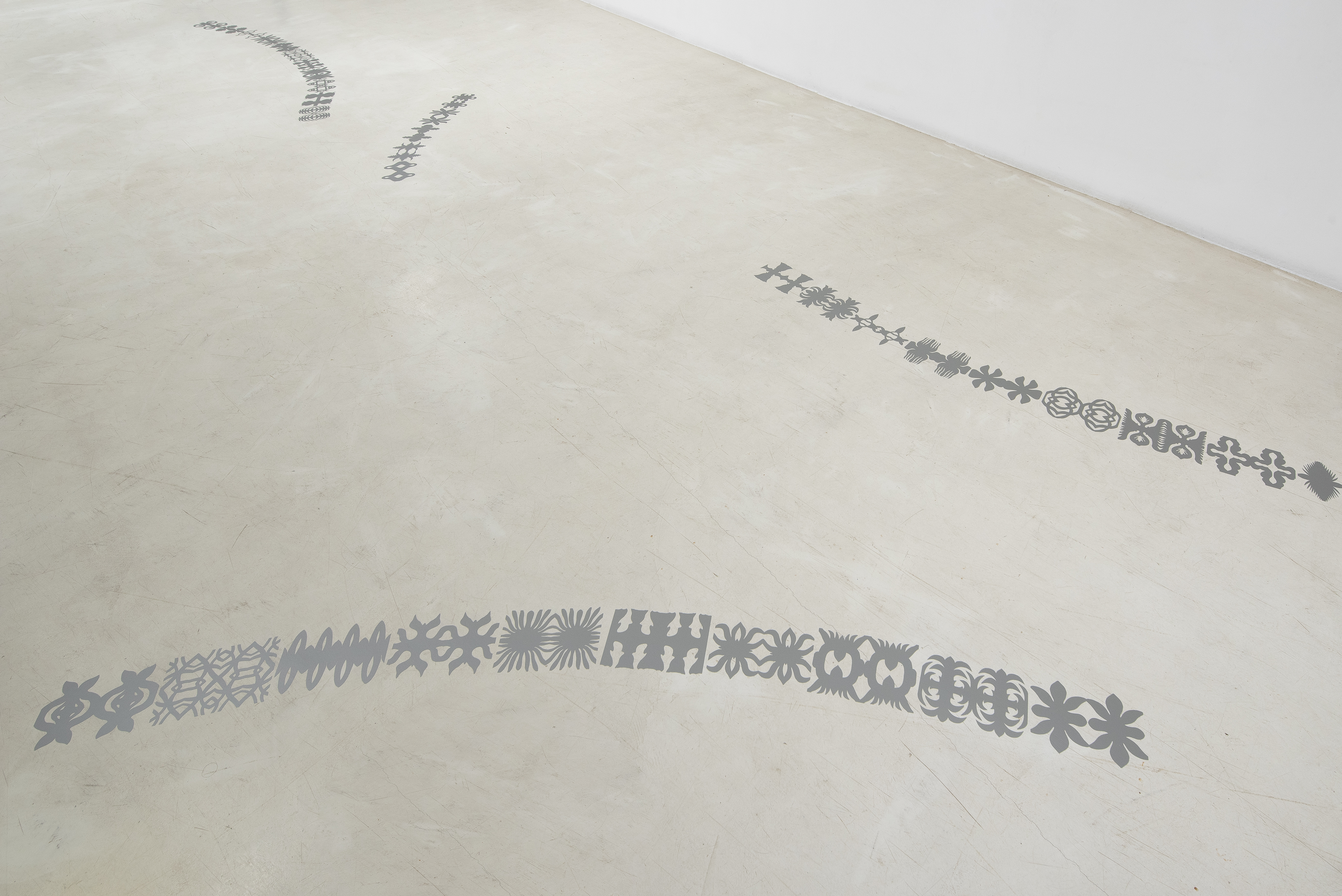
Tamara Turliun’s artistic practice engages with the traditional Ukrainian paper-cut art of Vytynanka - rethinking its technique and meaning through a contemporary, deeply personal lens. Her interest in Vytynanka blossomed during a moment of crisis: at the start of Russia’s full-scale invasion, simple paper ‘angels’ taped to windows became symbols of hope, memory, and fragility. This spontaneous act grew into an artistic language in which paper cutouts serve not only as nostalgic motifs, but as resonant, living artworks. Her practice has manifested in exhibitions at The Naked Room, where Tamara’s works - paper, gouache, and cutouts - shape intimate yet powerful reflections on vulnerability, identity, and resilience. She is also co-founder of Depot 12_59, a self-organised space that embodies her commitment to grassroots, community-driven art practice. Through this platform, she situates her work outside traditional institutional contexts - foregrounding autonomy, collaboration, and informal exchange. Across her art, Tamara blends tradition with innovation. By repositioning modest materials (paper, cutouts) as vessels of memory and expression, she transforms fragile media into artifacts of collective meaning. Her work invites reflection on domestic ritual, material fragility, and the persistent power of handmade craft - asserting that even the simplest form can carry deep cultural and emotional weight.